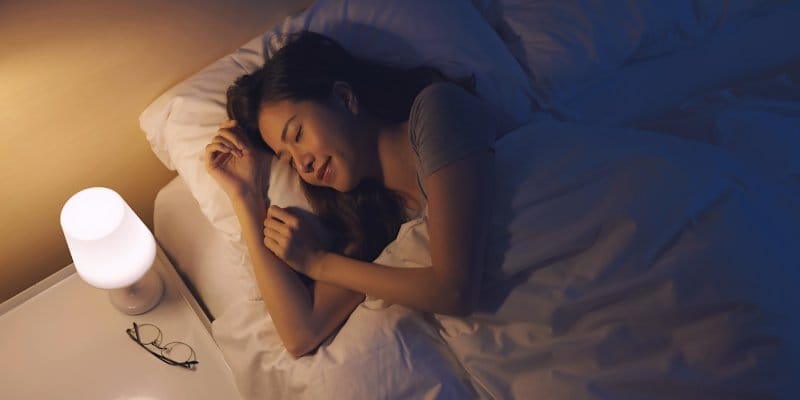
This Common Nighttime Habit May Raise Heart Disease Risk By Up To 35%
Artificial light at night may influence our health in deeper ways than we realize, affecting not just our sleep, but our stress levels & heart health.

Reported by MindBodyGreen.
You already know that doomscrolling until midnight wrecks your sleep. But a growing body of research suggests the damage doesn't stop there — it may be quietly working on your heart, too. New findings presented at the American Heart Association's 2025 Scientific Sessions show that chronic exposure to artificial light at night could raise cardiovascular risk by as much as 35%, according to MindBodyGreen — and the biological mechanism is more alarming than a little lost sleep.
Researchers analyzed brain scans and medical records from over 450 adults with no pre-existing heart disease. Using PET/CT imaging, they tracked both stress-related brain activity and arterial inflammation — two markers that can show up silently, years before a cardiac event. When they cross-referenced those scans with participants' nighttime light exposure based on home address, a pattern emerged: higher light exposure correlated with heightened activity in the brain's fight-or-flight centers, which in turn drove greater arterial inflammation and, over time, a measurably higher risk of cardiovascular events. In short, your brain may be reading your bedside lamp as a threat.
It's Not Just Melatonin
Most of us know that light at night suppresses melatonin. What gets less airtime is what happens next: light also activates the sympathetic nervous system, the same system that floods your body with cortisol when you're stressed. That response is lifesaving in an actual emergency. Triggered nightly by a TV glow or streetlight seeping through your curtains, it becomes chronic low-grade inflammation — contributing to elevated blood pressure, arterial stiffness, and long-term cardiovascular strain. The heart doesn't get a clean recovery window, and that compounds over years.
The fix isn't monastic darkness — it's intentionality. Swap bright blue-white LEDs for warm, amber-toned bulbs after sundown. Use blackout curtains or an eye mask to block ambient outdoor light; even dim, indirect exposure can interrupt the body's nightly repair cycle. Set a device curfew at least an hour before bed — phones and televisions emit the blue-spectrum light most likely to keep your nervous system in daytime mode. If you have exterior lighting, put it on a motion sensor so it's not running all night by default.
Your nighttime light environment is one of the few environmental stressors you can actually control — and your heart is keeping score.
Read the original at MindBodyGreen.