This Overlooked Mineral May Play A Role In Protecting Against Alzheimer’s
Emerging research suggests lithium may play a role in brain aging and Alzheimer’s prevention. Here’s what scientists are uncovering—and what it means now.
Reported by MindBodyGreen.
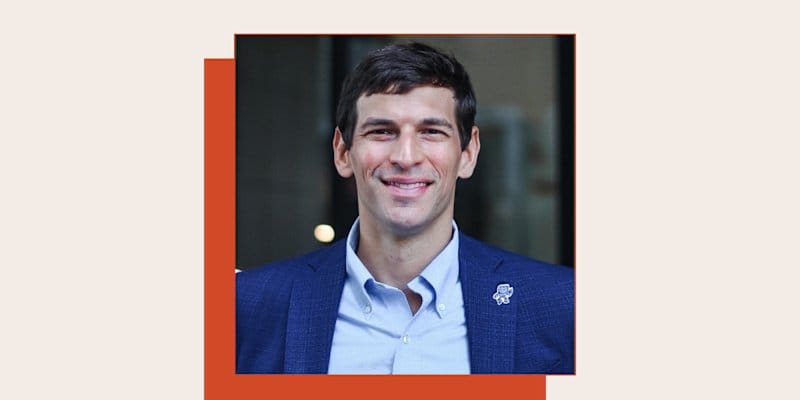
Lithium has spent decades in medicine's complicated middle ground — effective enough for bipolar disorder, stigmatized enough to keep everyone else at arm's length. But according to MindBodyGreen, physician-scientist David Fajgenbaum, M.D. is making a compelling case that this mineral deserves a much wider conversation, specifically around Alzheimer's disease prevention.
Fajgenbaum — who survived a rare immune disease five times and has since become a leading voice in drug repurposing — argues that many treatments we need may already exist. Lithium, he says, is a prime example of a compound hiding in plain scientific sight. The early signals were there over a decade ago. Researchers have found that lithium levels were significantly lower in the prefrontal cortex of people with mild cognitive impairment and Alzheimer's disease when compared to healthy brain tissue post-mortem — a pattern that didn't appear with other metals. That specificity matters.
What the animal research adds
In mouse models, cutting dietary lithium accelerated every hallmark feature of Alzheimer's: amyloid plaques, tau tangles, neuroinflammation, cognitive decline. Restoring it — particularly through a form called lithium orotate — not only slowed those changes but reversed memory loss in aging mice. The implication is that lithium isn't just a psychiatric tool. It may be doing real physiological work in the aging brain, and a deficit could be an early trigger in disease progression, not a late consequence of it.
That said, none of this means you should start supplementing. Lithium is not approved to prevent or treat Alzheimer's, and even low-dose forms require rigorous study before any clinical guidance can follow. What the research does suggest is something worth sitting with: Alzheimer's may not arrive suddenly in your seventies. The biological drift — including subtle shifts in micronutrients — could be underway years, even decades, earlier. Sleep, exercise, cardiovascular health, and inflammation management remain the evidence-backed foundation. But the lens through which we understand prevention is clearly expanding.
Fajgenbaum's broader point is that medical progress doesn't always look like a moonshot. Sometimes it looks like asking better questions about compounds we've used for fifty years. If the emerging lithium research holds, it could fundamentally change how we approach cognitive aging — and prove that the most important discoveries aren't always the newest ones.
The science is still developing, but the message is clear: protecting your brain may start earlier than you think, with biology you've barely been told to track.
Read the original at MindBodyGreen.