Ukraine War Photostory
Dara Petrova's photographs reveal a side of war that rarely makes the news: its emotional weight, lingering uncertainty, and quiet presence in everyday life.
Reported by Vogue.
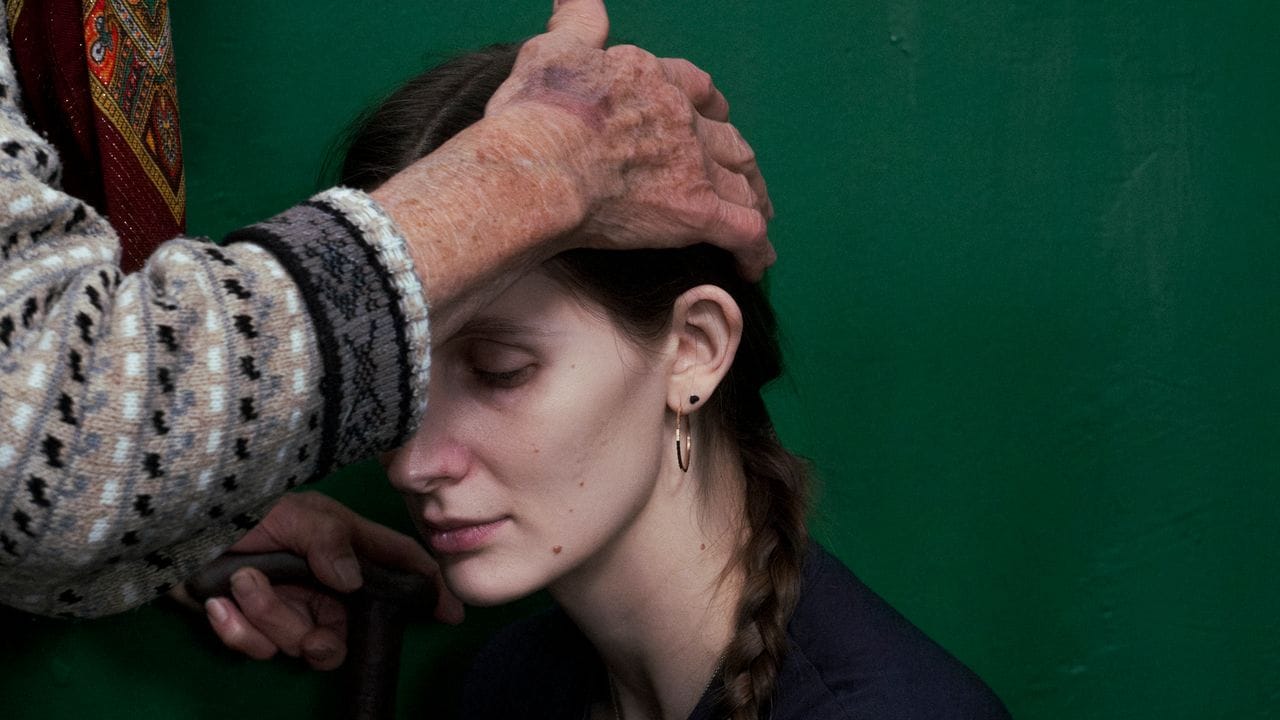
War doesn't always look like war. Sometimes it looks like a rooftop portrait session in a quiet Kyiv afternoon, or an old woman stroking a memory she's about to lose, or a girl stroking a cat in the apartment where she used to be afraid to make noise. Ukrainian photographer Dara Petrova has spent the years since Russia's full-scale invasion documenting exactly that — the version of conflict that doesn't make the front page. According to Vogue, Petrova, who was born in Odesa's Izmail region and relocated to Paris after the invasion, has repeatedly returned to southern Ukraine to build her ongoing series CIRCLE: an intimate archive of waiting, routine, and the particular grief of being the one who survived.
Petrova calls it a "guilty gaze" — the weight of being alive and abroad while the country reshapes itself around absence. It's the lens through which everything in CIRCLE is shot, and it makes for photography that is neither documentary nor elegy but something more unsettling: ordinary life, held very still.
The Rave, the Rooftop, the Room Upstairs
One of the series' recurring spaces is the techno rave — Kyiv's daytime version, running 10 a.m. to 10 p.m. to beat curfew. Petrova describes it as a place where soldiers on leave, wounded veterans, guilt-ridden civilians, and young men days away from mobilization age find each other in the dark and the bass. It is, she writes, a place to confront emotion without being seen doing it. This is where she met Vlad — tattooed with Cossacks, equal parts insecure and arrogant, a 19-year-old who volunteered for the front before he ever had the chance to learn English. When Petrova suggested he apply to the International Center of Photography, he laughed at her. She laughed too. Later, she found herself furious at billboards recruiting young men for a military that legally conscripts at 27 — furious at the gap between image and reality, at the way war becomes the fastest social ladder for boys whose families couldn't afford another option.
Then there's Diana. A neighbor's stepdaughter. A girl Petrova had heard through the ceiling during a domestic violence incident, frozen in a kitchen with her parents while her mother's instincts were braver than anyone else's. A year later, Diana's stepfather disappeared at the front. Petrova went upstairs with her camera. They talked for hours. Diana said she hadn't enrolled in university that year and was glad to have more time with her mother. Petrova said something forgettable about next year. Walking out, she caught Diana stroking her cat — and felt, with shame, something like relief. The war had taken the person Diana had most needed to fear.
At the other end of the series is Maria — elderly, aging visibly across war years, a living connector between WWII, famine, and now this. She remembers pigskin shoes and stoves heated with hay and a classmate named Dima who became an agronomist. Petrova writes that she cannot believe she will one day forget everything she is documenting now.
That's the real subject of CIRCLE — not the war itself, but the unbearable ordinariness it moves through, and the women holding its memory together with bare hands.
Read the original at Vogue.