What Is Surrealism? Alex Eagle Explains the Art Movement
Alex Eagle on why the movement is having a moment right now.
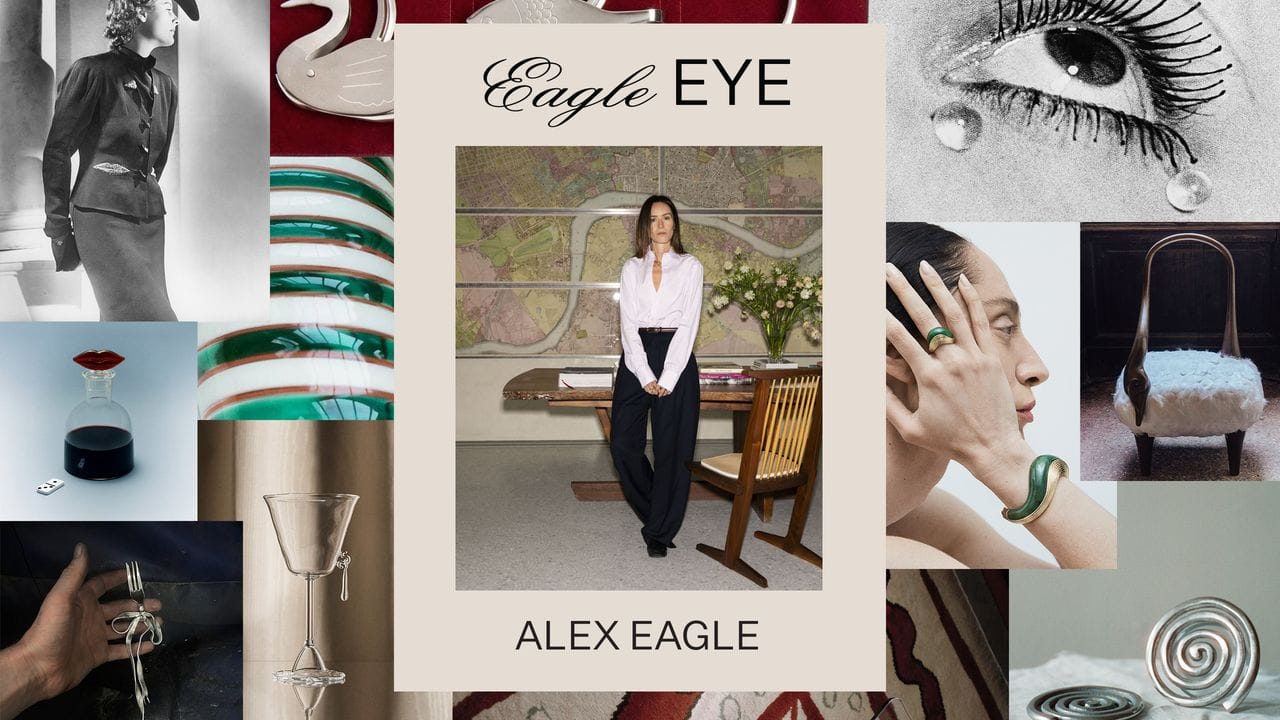
Reported by Vogue.
Something is shifting in the aesthetic conversation, and it has nothing to do with quiet luxury. The movement gathering momentum right now is older, stranger, and infinitely more interesting: Surrealism — that early 20th-century rupture that gave us melting clocks, fur-lined teacups, and the radical idea that the unconscious mind was worth listening to. According to Vogue, it's not just a gallery concern anymore. It's showing up in your wardrobe, on your dinner table, and in the way you're thinking about your home.
The origin story matters here. In 1920s Paris, poet André Breton published his manifesto demanding art built from dreams, desire, and irrationality — a direct revolt against the rational order he blamed for Europe's collapse. What followed produced some of the most viscerally recognizable images in art history: Dalí's distorted timepieces, Magritte's bowler-hatted men suspended in logic-free space, Meret Oppenheim's teacup lined in fur. The central mechanism was always the same — take something completely familiar, then push one element just far enough that it tips into wrongness. That lurch of recognition? That's where the pleasure lives.
Why It Hits Different Right Now
We are deep in the era of algorithm-approved dressing, and people are bored. As Egyptian designer Laila Gohar puts it bluntly: "Minimalism and quiet luxury is just bloody boring. People want things with a pulse again." Gohar owns a silver teapot that is, by her own admission, completely unusable — too dramatic to pour from, too beautiful to put away. She describes it as an object that "seems functional at first and then slowly reveals itself as emotional instead." Jewelry designer Delfina Delettrez frames Surrealism as "desiring without logic — allowing instinct, obsession, memory, contradiction, humor, sensuality, and fantasy to enter the room." Marie-Louise Scio, CEO and creative director of Il Pellicano, keeps it cleaner: "Surrealism opens the door to emotion, fantasy, and the unexpected."
In fashion, the tradition runs through Elsa Schiaparelli — who collaborated directly with Dalí and understood that a garment could hold a joke — straight to what's being made right now. Alaïa's triangle gabardine pants balloon dramatically at the thigh before tapering to a precise ankle, defying the logic of how fabric is supposed to behave on a body. Bottega Veneta's gathered jersey tops look caught mid-transformation, fabric twisted as if it hasn't decided what it wants to become yet. These pieces operate on the same principle as a Dalí canvas: start with something completely understood, distort one element, and suddenly proportion stops feeling like a law. Scio's note — "be adventurous" — sounds simple, but it's actually permission to stop dressing like you're managing risk.
What Surrealism ultimately offers — in art, in fashion, in the objects you choose to live with — is the freedom to hold contradictions without resolving them. Not everything needs to add up, and not everything functional needs to be only functional. Start with one thing on a shelf that makes someone stop mid-conversation, and you'll understand exactly what this movement was always about.
Read the original at Vogue.