What Lured Renate Reinsve into the <em>Backrooms</em>?
We had to know what inspired the Oscar-nominated actress to join a 20-year-old’s “Creepypasta” movie
Reported by Harper's Bazaar.
There is something deeply strange about an empty office hallway at 2 a.m. — the hum of fluorescent lights, the carpet that goes nowhere, the sense that you have wandered somewhere you were never supposed to be. That specific dread has a name now: liminal spaces. And according to Harper's Bazaar, it's the obsession powering one of A24's most anticipated horror films of the year.
Backrooms, directed by 20-year-old Kane Parsons — known online as "Kane Pixels" — traces its origins to a 2019 post on 4chan's paranormal board, where a user requested "disquieting images." What followed was a sprawling internet mythology of boundless, fluorescent-lit office rooms that seemed to devour people whole. When the pandemic emptied those very spaces in real life, the horror felt less fictional. Parsons, then 16, turned the concept into a cult YouTube series shot as VHS found footage. Now it's a feature film with a cast that includes Chiwetel Ejiofor, Mark Duplass, Finn Bennett, and Lukita Maxwell — and, perhaps most surprisingly, Oscar-nominated actress Renate Reinsve.
The Unlikely Casting That Makes Perfect Sense
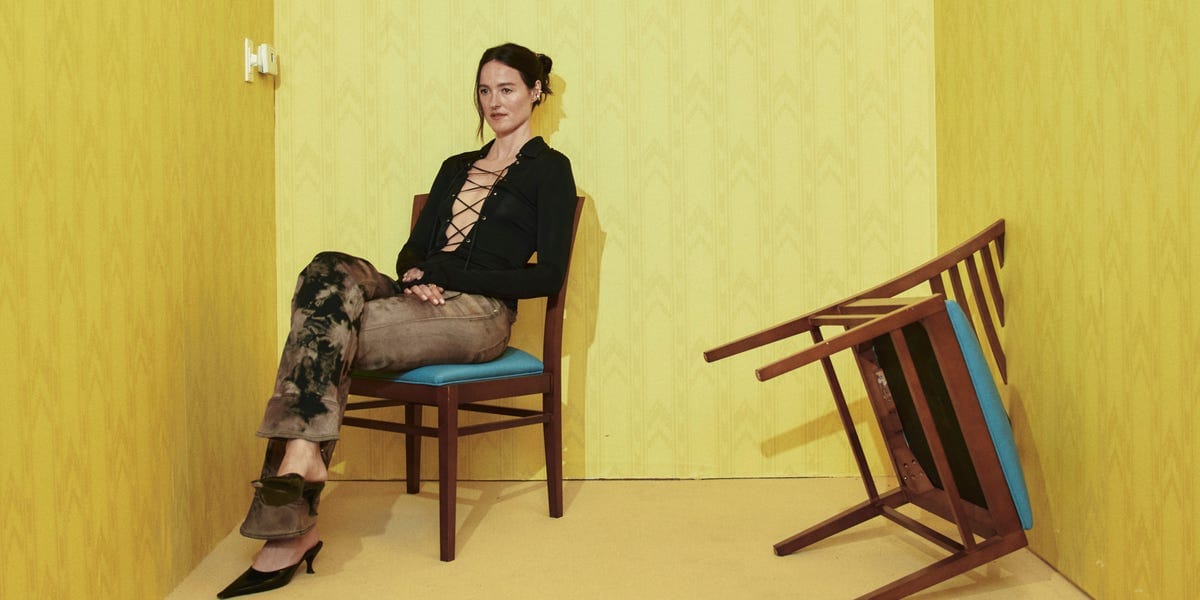
Reinsve — who won Best Actress at Cannes in 2021 for The Worst Person in the World and earned an Academy Award nomination this year for Sentimental Value, both directed by Joachim Trier — is not who you'd expect to anchor a Gen Z internet-horror movie. She plays Dr. Mary Kline, a therapist who descends into a nightmarish maze of distorted rooms searching for a missing patient. What pulled her in wasn't the genre; it was the philosophy underneath it. "It related so much to the way I see the world and the absurdity of the real world," she explains. During the pandemic, she found herself drawn to surrealism as the only honest framework for processing reality's collapse — and then Parsons called, apparently building a film around exactly that instinct. When she mentioned Blue Velvet and its subconscious, shape-shifting rooms as a reference point, Parsons had no idea what she was talking about. His influences were YouTube, video game narratives, and the participatory mythology built by an entire online fanbase around a single image. "I felt I could see my world with new eyes and his world with new eyes," she says.
What Reinsve recognized in Parsons — and in the Backrooms mythology itself — is a generational reckoning with environments designed for efficiency that quietly corrode the mind. Spaces optimized for productivity, stripped of warmth, built to be forgotten. The film externalizes anxiety: the dread isn't just in the characters, it's in the rooms themselves. For a generation that came of age online and inside a pandemic, that's not horror. That's memoir. "Sometimes if you have something irrational in you, the only way to meet it is to do something else that's irrational," Reinsve says — which is, honestly, a more elegant explanation for internet culture than most think pieces manage.
When ambiguity is the dominant condition of the world, a horror film about endless, senseless rooms isn't escapism — it's the most honest mirror available.
Read the original at Harper's Bazaar.