Who Are the Custom Mannequins in “Costume Art” Based On? We’re So Glad You Asked
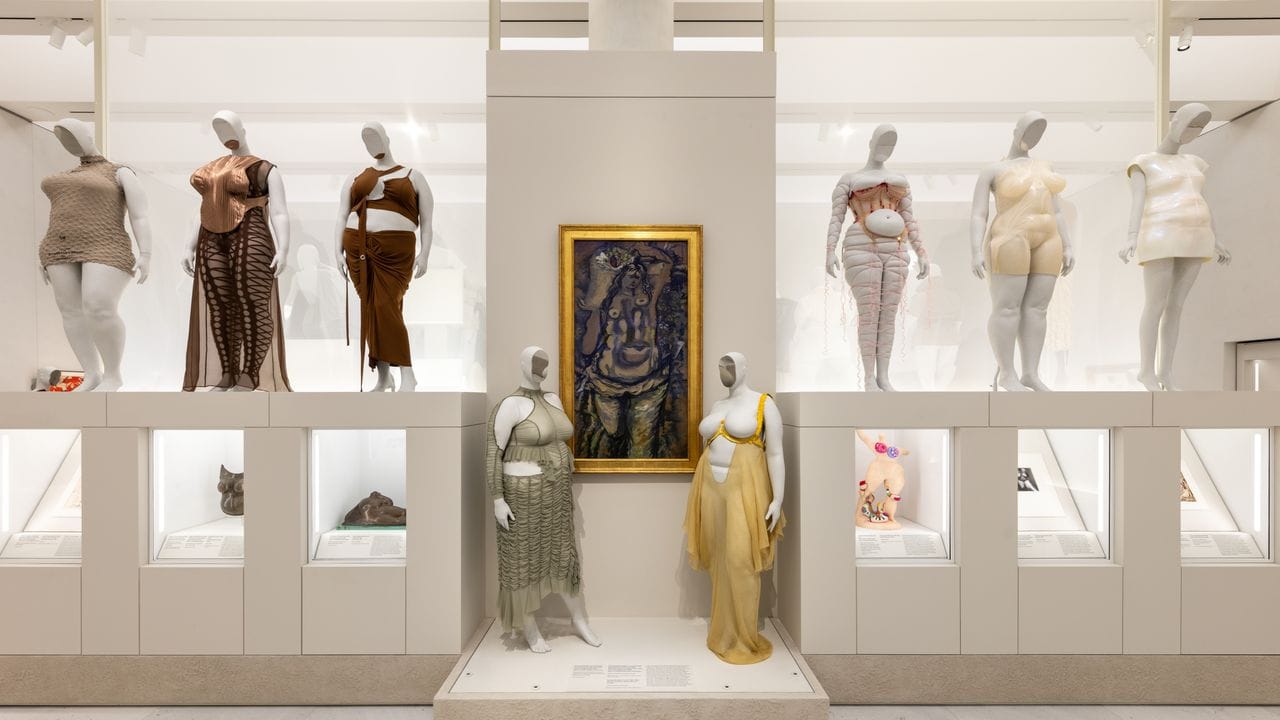
Visitors to the Condé M. Nast Galleries this year will see some of the fashion in “Costume Art” on silhouettes based on nine very real people, spanning a range of body types and mobilities.
Reported by Vogue.
The Met Costume Institute has never been interested in a straightforward clothes-on-a-rack moment, and this year's exhibition is no exception. "Costume Art" — curated by Andrew Bolton — takes on one of fashion's oldest, most loaded conversations: how art and the industry have interpreted, idealized, and distorted the human body. The way the clothes are displayed isn't incidental to that argument. It is the argument.
According to Vogue, 25 custom mannequins appear across two of the show's 12 thematic sections, their forms built from the actual bodies of nine living people via photogrammetry, a 3D-scanning process that captures precise physical likeness. The "Disabled Body" section features silhouettes modeled after writer and activist Sinéad Burke, athlete Aimee Mullins, model and musician Aariana Rose Philip, model and Freedom Is Fly founder Antwan Tolliver, and swimwear designer Sonia Vera — plus one figure drawn from archival imagery of the late drag performer Goddess Bunny. The "Corpulent Body" section centers models Jade O'Belle and Charlie Reynolds alongside artist and couturier Michaela Stark and singer-songwriter Yseult.
The Mirror as a Design Choice
Where a face would typically appear on each mannequin, artist Samar Hejazi installed a mirrored surface instead. That's not an aesthetic accident. In an essay for the "Costume Art" catalogue, Hejazi writes that she and Bolton kept circling the same questions throughout development: How do you destigmatize a body that fashion has historically ignored? How does a mannequin create empathy rather than reinforce distance? The mirror forces the viewer into the equation — you are not a passive observer of someone else's body; you are implicated in the looking.
The approach continues a trajectory Bolton has been developing across recent Costume Institute exhibitions. For 2025's "Superfine: Tailoring Black Style," artist Tanda Francis based mannequin features on André Grenard Matswa, one of the original Sapeurs. Before that, "Sleeping Beauties" skipped silhouettes entirely for its most fragile pieces, displaying them in coffin-like vitrines. Each time, the display method becomes a curatorial statement — form and concept locked together rather than form serving as neutral backdrop.
Fashion has spent decades insisting its mannequins were aspirational rather than exclusionary, a distinction that never quite held up. Putting photogrammetry-scanned bodies with disabilities and larger bodies at the center of a Met Costume Institute show — not as a side note, but as an organizing principle — is the industry looking directly at what it has historically refused to reflect back.
Read the original at Vogue.