Why Are So Many Influencers Speaking at Harvard Business School?
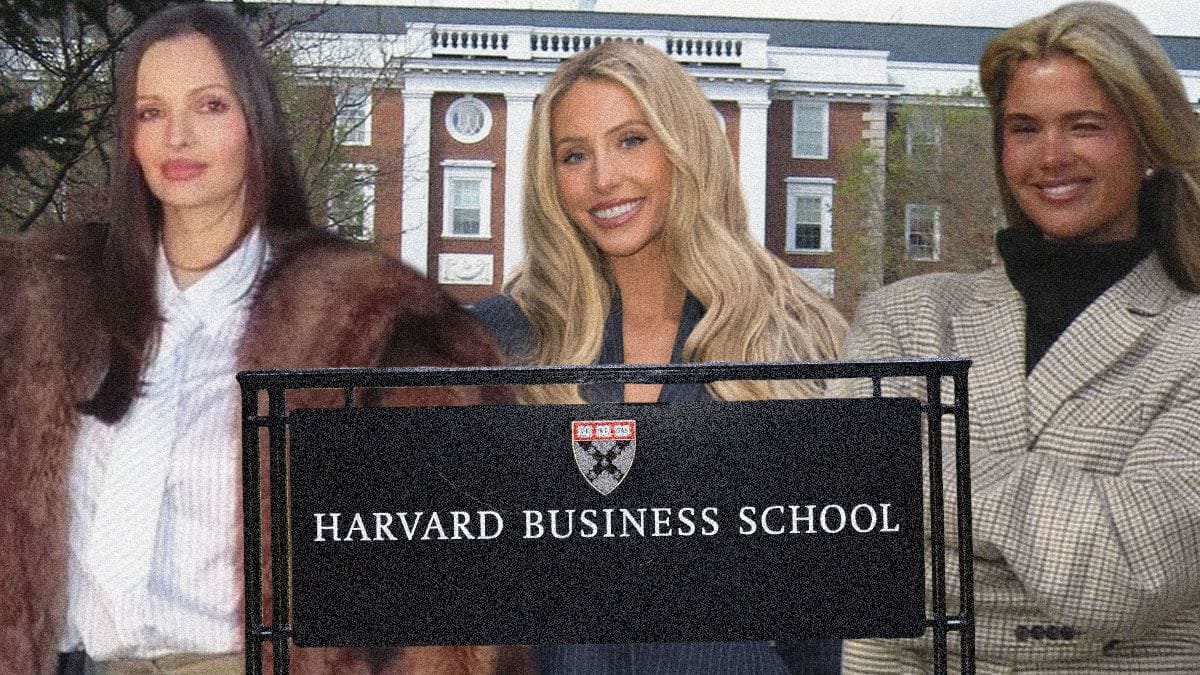
Posing next to the acclaimed university’s signpost has become an Instagram fixture for creators invited to campus. What’s going on?
Reported by Vogue.
Harvard Business School has become the ultimate influencer flex. When Alix Earle—a TikToker with millions of followers—appeared in Reza Satchu's class to discuss her creator career, nobody expected it to become a teaching moment. Yet Satchu, a senior lecturer, was so impressed he's now writing a Harvard Business School case study about her. She's one of dozens: according to Vogue, Matilda Djerf (founder of Djerf Avenue), MrBeast, Bethenny Frankel, and Karlie Kloss have all graced the campus. The trail started when Kim Kardashian visited in 2023, and now influencers are treating the Harvard Business School sign like a status symbol—proof that the creator economy has officially arrived at institutions that once dismissed content creation as frivolous.
The shift reflects a genuine reckoning. When Satchu first got the call about inviting Earle, his reaction was blunt: "There's no way." But after consulting his Gen Z daughters and his class (who voted yes), he reconsidered. His reasoning now? "This is the new way in which people market, and our students need to understand and learn that." The creator economy is expected to hit $500 billion by 2027, according to Goldman Sachs—a number that's hard to ignore. Still, classroom invites remain selective. Satchu has turned down 30 to 40 influencer requests; Earle was his only yes. "I view it as hallowed ground," he says. Student-run clubs and conferences are far more open, hosting one to two speakers monthly without needing to fit curriculum requirements.
What actually matters at Harvard
The real distinction lies in what gets discussed. When Bethenny Frankel visited the HBS Retail & Luxury Goods Club, the conversation wasn't about Skinnygirl as a product—it was about how she built trust with her audience before monetizing it. Pia Mance, founder of jewelry brand Heaven Mayhem, made sure to emphasize her $10 million business rather than her influencer status. "I think you need something real to stand behind when you walk into a room like that," she says. The speakers bringing substantive brand-building lessons—not just follower counts—are the ones earning invites.
Still, the bristling reactions persist. Critics question why a non-lawyer like Matilda Djerf speaks to Harvard Law students (though she prepared rigorously with her legal team). Eve Lee, founder of consultancy Source Material Service, frames the dismissal bluntly: "The influencer industry is still seen as fluffy, and the dismissal has been gendered, classed, and generational." But Lee and others argue there's real value in what creators know—they've already mastered attention and community, the exact things traditional businesses spend fortunes trying to acquire. For the next generation of business leaders, that's a masterclass money can't buy.
The Harvard effect proves one thing: the creator economy isn't a phase—it's a pipeline.
Read the original at Vogue.