Why This Season of <em>Euphoria</em> Looks So Different
Director of Photography, Marcell Rév, tells us why every season looks (and feels) different
Reported by Harper's Bazaar.
Euphoria season three looks nothing like what came before—and that's entirely intentional. Director of photography Marcell Rév made a deliberate choice to shoot the new season in 65mm film, a format typically reserved for sweeping epics, replacing the 35mm digital aesthetic of earlier seasons. The result is a visual overhaul that mirrors the show's narrative shift: five years forward, the teenage cast scattered across vastly different adult lives, each one exponentially messier than the last.
The technical decision wasn't arbitrary. According to Harper's Bazaar, Rév explained that season one's digital camera captured "how teenagers might imagine themselves" rather than reality—a kind of aspirational fantasy. When the show switched to film for season two, it introduced nostalgia, rooting viewers in memory. Now, with 65mm and its wider aspect ratio, Rév and creator Sam Levinson needed what Rév calls a "bigger scope and a richer image"—one that could contain multiple, fragmented stories simultaneously without feeling cramped. The expanded frame lets the camera pull back, becoming more observational, less intimate.
Chaos as Cinematography
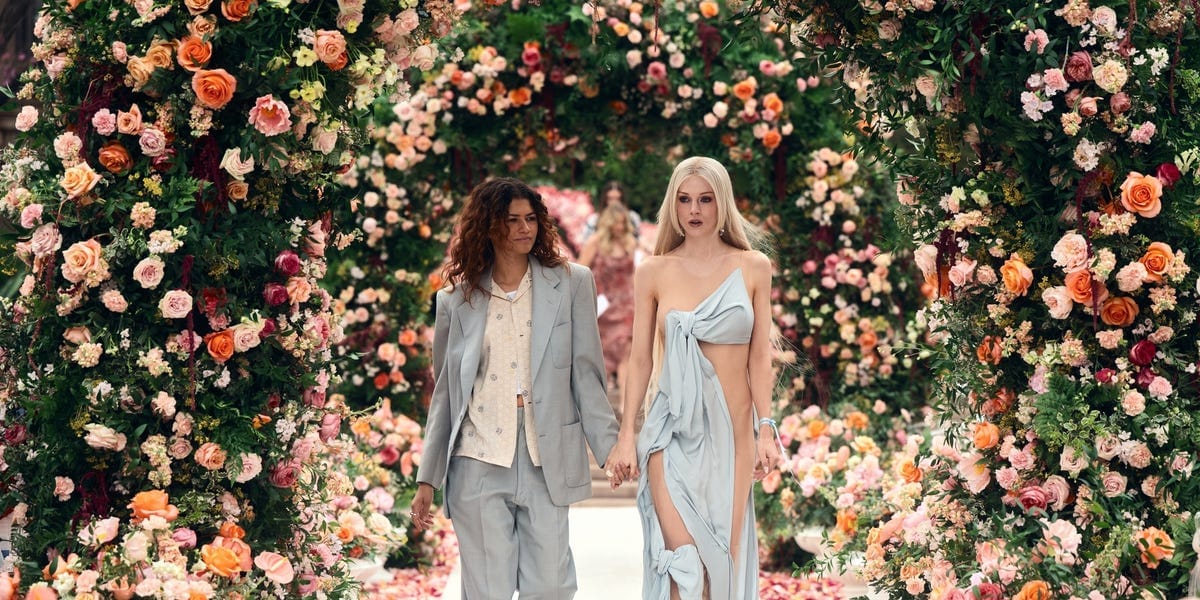
This distance is crucial because season three demands visual density. Where seasons one and two lingered on close-ups of faces—think Cassie sobbing among flowers, Maddy's nails clacking during confrontation—season three packs every shot with competing narratives. The back room of the strip club where Rue now works teems with bodies and tungsten light and lived-in detail. The Jacobs' wedding sparkles with $50,000 worth of blooms before collapsing into violence. Rév drew inspiration from Technicolor classics like Hitchcock's Vertigo and North by Northwest, chasing what he calls the "richness of those Hollywood movies," but his real muse was painter Pierre Bonnard—known for luminous, color-saturated canvases that pulse with life.
What makes Euphoria distinctive isn't just technical prowess; it's the collision between beauty and brutality. A pristine wedding becomes a nightmare. A luxury high-rise becomes a trap. Rév frames these contradictions as fundamental to storytelling itself: "Poetry is about contrast," he explained to Harper's Bazaar, "putting words together that don't necessarily belong together." That tension—between lush cinematography and gut-wrenching violence, between wide establishing shots and the claustrophobia of consequence—keeps audiences watching, even as the show spirals into territory that feels increasingly unhinged.
The camera doesn't just document depravity; it beautifies it, which might be the most unsettling choice of all.
Read the original at Harper's Bazaar.