With Her First Solo Museum Show in the US, Widline Cadet Conjures Scenes She Can’t Quite Remember
In “Currents 40: Widline Cadet” at the Milwaukee Art Museum, the photographer presents a visual language that investigates what it means to live with a fractured sense of home scattered across place and time.
Reported by Vogue.
Plastic flowers aren't a compromise in Widline Cadet's world — they're the whole point. The Haitian American photographer, 33, has spent the last decade building a visual archive of migration, memory, and what gets lost in the crossing. Her first solo museum show in the United States, Currents 40: Widline Cadet, is on view at the Milwaukee Art Museum through August 9, and it announces an artist working at a completely different frequency than the documentary photography we usually get about immigrant experience.
According to Vogue, the exhibition brings together 52 photographs and videos made across Haiti, New York, Florida, and Los Angeles — each one pulling from Cadet's personal history while reaching toward something larger about the Black diasporic condition. The centerpiece installation, Altar #2, recreates her mother's Washington Heights apartment in obsessive, loving detail: laminate floors, ceramic angels, framed family photos, and those deliberately fake blooms Cadet sourced and pruned herself. ("A Haitian living room is never plain," she said. "It's always colorful, almost gaudy.") Where curtains would hang, a wall-sized portrait of her father stares back at you. It's a folk chapel. It's a family altar. It's both.
The Geography of Half-Remembered Things
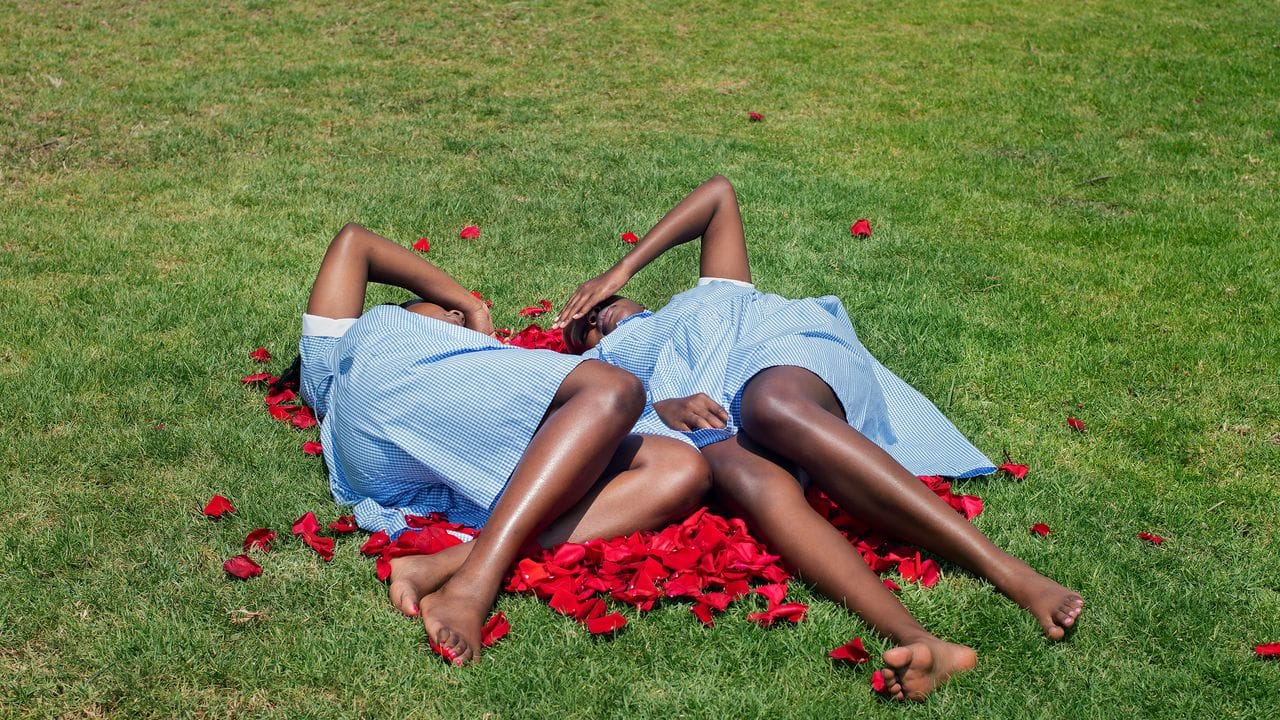
Cadet was born in Haiti and left at 10, years after her mother had already immigrated to New York. What remained of those early years — the walk to school past roadside flora, her mother's face — exists mostly as atmosphere rather than memory. That deliberate haziness is the work. Her photograph Si Ou Ta Dwe Bliye Wout Lakay Ou stages two women in gingham school uniforms walking away from the camera into dense brush, faces unseen. "It's more important to me to communicate the feeling of not fully remembering," Cadet has said. "I want to replicate the experience of diaspora, this floating landscape that lives in my mind." MAM curator Kristen Gaylord puts it plainly: "The work isn't just about what's been lost, it's about what she's built in its place."
Her first major video work, Views from Home — shot primarily on an iPhone — stitches together footage of Haiti and relatives' homes across the U.S., Zoom birthday parties, suburban Florida, voice memos in Creole from her mother. It's tender and formally ambitious, refusing the crisis framing that dominates mainstream images of migration. Painter Calida Rawles, among the Black women artists who lent work to the Milwaukee show, described encountering Cadet's photography as feeling "timeless — like I can escape into it, create my own narratives, and dream with it."
The show's most quietly devastating gesture is in the arrangement of three portraits: Cadet's own self-portrait in a ruched satin dress, a photo of her mother beside it, both facing an oversized image of her father. Installed together, the family occupies the same room — maybe for the first time. When the dominant narrative around migration flattens people into symbols of crisis, Cadet insists on the full, complicated, decorated, flower-filled interiority of one family's life — and dares you to actually look.
Right now, Widline Cadet is making the most emotionally precise work about diaspora in American photography.
Read the original at Vogue.