Your Water Filter Might Not Be Doing What You Think — Here's How To Actually Check
Not all water filters remove lead, PFAS, or arsenic. Here's why filter certification matters and how a new at-home test called ROSE helps you find out what's really in your tap water.
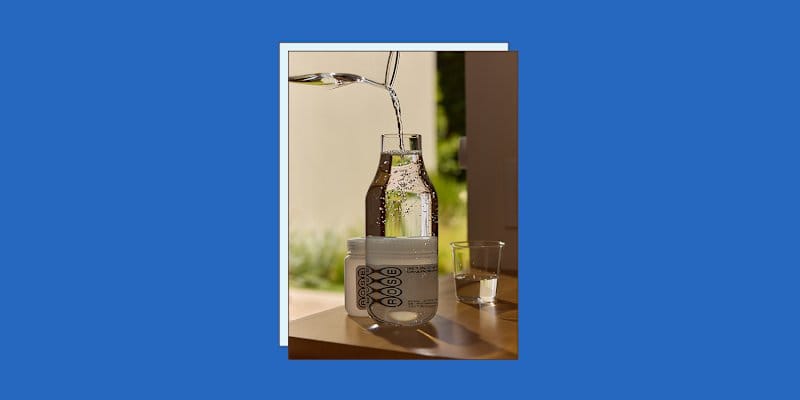
Reported by MindBodyGreen.
You bought the filter. You swap the cartridge on schedule. You've essentially decided the problem is handled. But according to MindBodyGreen, that assumption may be doing you a quiet disservice — because filters are certified to do specific jobs, not to eliminate everything that could harm you.
Here's the distinction that matters: NSF/ANSI 42 certification — the most common standard — only addresses taste, odor, and appearance. It says nothing about health-risk contaminants. For that, you need a filter certified under NSF/ANSI 53 or NSF/ANSI 58 (reverse osmosis). The EPA has set a health-based goal of zero for lead in drinking water, yet one study found 25% of tap water sources tested exceeded 1 part per billion — the threshold flagged by the American Academy of Pediatrics. Meanwhile, an estimated 71 to 95 million Americans may be drinking groundwater with detectable PFAS, the "forever chemicals" tied to elevated cholesterol, liver damage, thyroid disruption, and reproductive health concerns. Clean-tasting water and safe water are not the same category.
A New Way to Actually Know What You're Drinking
Enter ROSE, an exposure-health startup co-founded by Eli Bronner and Henry Ellis, launching October 14, 2026. Backed by a scientific advisory board in environmental health, toxicology, epidemiology, and chemistry, the company describes itself as the first of its kind in the exposure-health space. Its flagship product: a $399 at-home water test that screens a single tap water sample for more than 100 contaminants — PFAS, heavy metals, pesticides, volatile organic compounds — processed in an ISO-certified lab using methods the company says surpass standard EPA performance criteria. There's also a two-tap bundle if you want to compare sources within your home.
The process takes roughly seven minutes. Freeze the included ice pack overnight, collect your water sample first thing in the morning after the tap has sat unused for about eight hours, and ship it via UPS the same day (Monday through Wednesday keeps it out of weekend shipping purgatory). Results arrive by email, with a ROSE team walkthrough available. The logic is methodical: test, treat, track. You find out what's actually present, match that to the correct filter certification, and retest to confirm it's working — which also tells you whether your replacement schedule is realistic for your specific water source, not just the manufacturer's average. ROSE also has longer-term ambitions: biomarker-based exposure testing is slated for early 2027, with air, mold, and body testing on the roadmap.
Your water filter is only as protective as what it's actually certified to remove — and the only way to know if yours is covering your real risks is to test what's in your water before and after.
Read the original at MindBodyGreen.