A New Museum Show Explores The Connection Between Royal Thai Dress and Parisian Couture
In Paris, a new exhibition explores Queen Sirikit’s flair for fashion diplomacy.
Reported by Vogue.
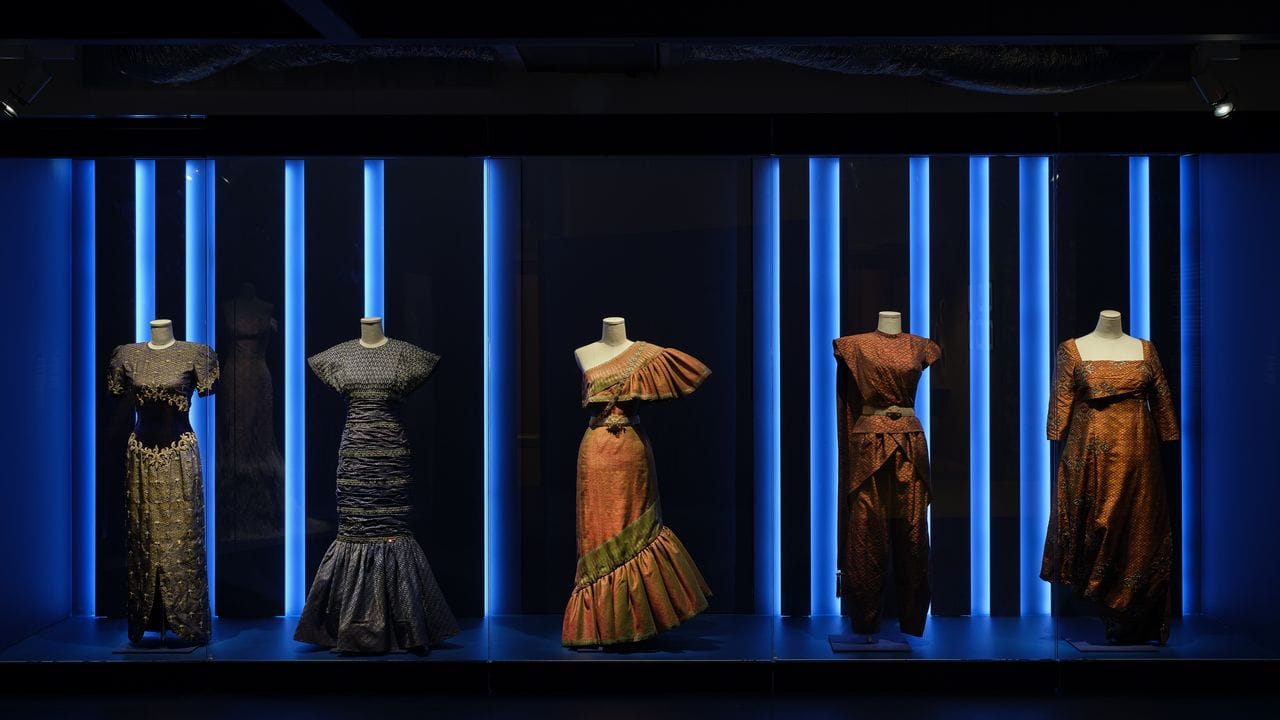
There's a fashion story hiding in plain sight at the intersection of Paris and Bangkok — and the Musée des Arts Décoratifs is finally telling it. Opening now and running through November 1, La Mode en Majesté: Royal Thai Dress from Tradition to Modernity brings nearly 200 pieces from the wardrobe of the late Queen Sirikit of Thailand into one of the world's great design institutions. The occasion is the 170th anniversary of the Franco-Thai Treaty of Friendship, but according to Vogue, the real relationship between these two cultures stretches back to 1686 — when Louis XIV threw what may have been the most extraordinary reception of his reign for Siamese ambassadors, and Siam briefly colonized the French court's imagination.
Queen Sirikit understood fashion the way generals understand terrain: as a field of strategy. Married at 17 to King Bhumibol Adulyadej a week before his coronation — having met him in Paris, where her father served as Thai ambassador — she became a diplomat in couture almost immediately. Her instinct for soft power drew repeated comparisons to Jacqueline Kennedy. But her project was more specific: to put Thailand on the global cultural map at a moment when Southeast Asia was barely a blip on the Western imagination. She wore Balmain to state dinners and national dress around the world, not as a costume but as a statement. The distinction mattered enormously.
A Collaboration Written in Silk and Gold Thread
The exhibition's most compelling argument is that what developed between Queen Sirikit, couturier Pierre Balmain, his successor Erik Mortensen, and the embroidery house Lesage wasn't influence — it was genuine co-creation. Balmain worked directly with Thai designers, photographed local textiles, and handed sketches to Lesage to transform temple paintings into haute embroidery. He learned to work with the irregularities of hand-woven cloth rather than against them. The result was something the Queen's granddaughter, HRH Princess Sirivannavari Nariratana Rajakanya, describes as "not 100% Thai and not 100% French, but a true collaboration of two artists." The show traces that exchange alongside the Queen's own codified contribution to dress — the "Eight Styles of Thai Dress," which she developed as the definitive standard for modern Thai formal wear.
Princess Sirivannavari, trained at Chulalongkorn University and the Chambre Syndicale de la Couture Parisienne, now carries this legacy forward through her self-named brand — currently shown in Milan, with Paris in its near future. She speaks about her grandmother with the clear-eyed reverence of someone who received real instructions, not mythology. Queen Sirikit's directive was direct: "Do not forget your homeland and culture. Keep all the good of Europe and bring it to the Thai, and develop them. And don't leave the craftspeople behind." The princess is also blunt about why that matters now: as the new generation in Thailand mixes Thai silks and natural dyes with high-low styling, she sees it as proof that national identity and fashion fluency aren't in tension. And she'll tell you, without equivocation, that craftsmanship is the future of fashion — "one thing AI cannot do."
When centuries of cultural exchange can be traced through a single wardrobe, fashion stops being decoration and becomes exactly what Queen Sirikit always knew it was: a language with real geopolitical stakes.
Read the original at Vogue.