Eagle Eye on… Modernism
Alex Eagle on why the movement is having a moment right now.
Reported by Vogue.
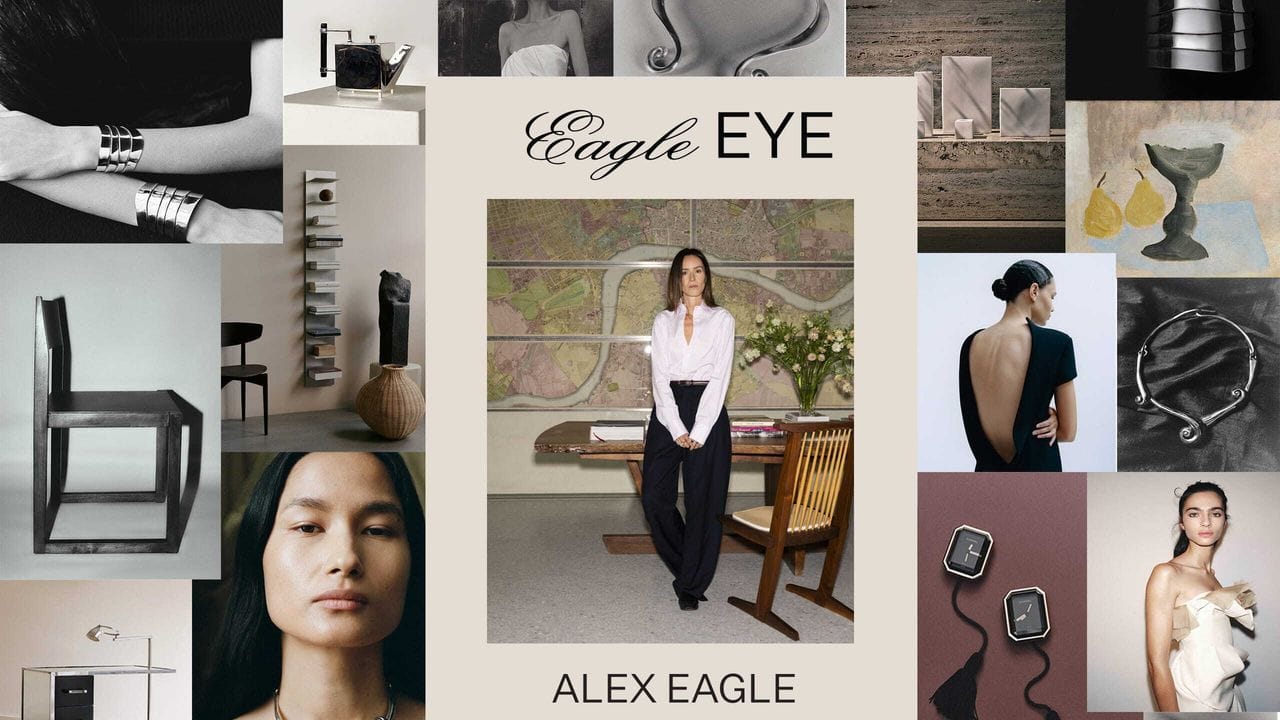
Modernism isn't a style you adopt—it's a lens that reframes everything you already own. That white shirt stops being another purchase and becomes a considered commitment to reduction. The bare-walled room transforms from sparse into intentional. Once you start seeing design through this filter, you can't unsee it, which Alex Eagle, the London-based designer behind the column Eagle Eye, describes as either a gift or a mild affliction.
Eagle's thesis is simple: modernism, at its core, is about editing. Strip away everything until what remains feels inevitable—not cold, just right. In a world drowning in more, more, more, the modernist principles of material honesty, construction integrity, and quiet focus on longevity feel almost transgressive. The movement's original architects understood this intuitively. Le Corbusier lived with austere clarity. Eileen Gray designed her own house and filled it with pieces she'd made. Charlotte Perriand surrounded herself with her own furniture. They were, objectively, chic—and they proved restraint could be magnetic.
The New Modernist Moment
According to Vogue, this year's Salone del Mobile showed a noticeable return to restraint, with designers exposing raw materials—chrome, glass, steel—to celebrate their inherent quality rather than disguise it. Contemporary labels like The Row, Rier, and Auralee Tokyo continue this lineage. On a smaller scale, Joseff Hoffmann's cutlery and Sophie Buhai's architectural silver jewelry translate 20th-century modernism into everyday objects and wearable sculpture.
The real power of anchoring taste to modernism is psychological reframing. You're not a shopaholic chasing trends; you're a collector making deliberate choices. You're not swapping one minimalist piece for another; you're deepening a relationship with quality. Fewer, better things. Objects that justify their existence through function and time, not novelty. Fashion becomes the piece that needs no argument. Interiors become about space, light, and purposeful presence.
That restraint, counterintuitively, creates intimacy. By leaving room for interpretation rather than imposing a complete narrative, modernism invites you in. It's a mindset masquerading as an aesthetic—one that rewards editing over accumulation, honesty over polish, and the patient act of living with fewer, more considered things.
Read the original at Vogue.