Miranda Priestly Had Nothing on Diana Vreeland
Vogue staffers remembered the intrepid and declarative editor and curator in a 1989 issue of Vogue.
Reported by Vogue.
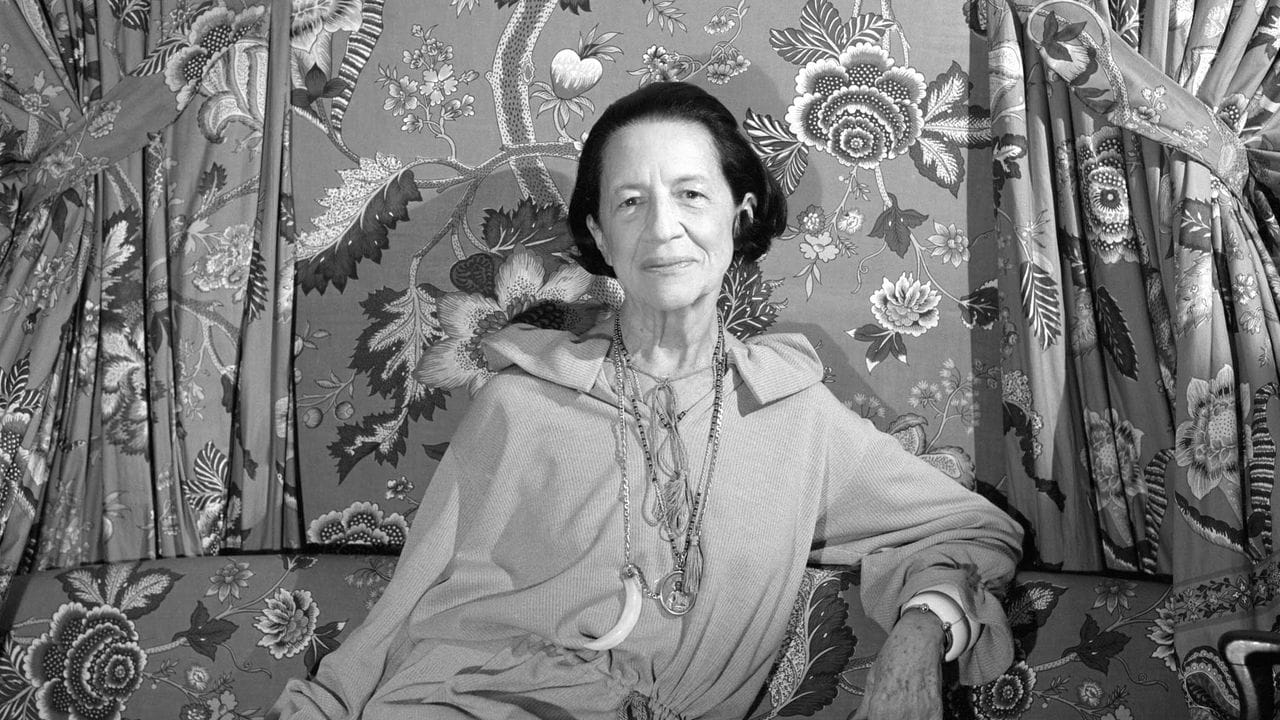
Diana Vreeland wasn't just an editor—she was a force of nature who rewired how fashion magazines could operate. According to Vogue's archive, when Vreeland arrived at the publication, she didn't tinker with tradition; she dismantled it entirely. She understood something her predecessors didn't: that fashion was theater, and a magazine's job was to dazzle, provoke, and transport. She moved Vogue away from the stiff propriety of the social register toward something younger, rawer, more alive. She sensed the pulse of the street before anyone else did, and she had the discipline—brutal, exacting discipline—to execute her vision flawlessly.
What made Vreeland terrifying and brilliant was her refusal to separate aesthetics from process. She obsessed over hair combing and retouching techniques with the same intensity she brought to conceptualizing spreads. She was a perfectionist's perfectionist, yet she moved fast, trusting instinct over committee consensus. She didn't tolerate questions about her authority because creative chaos requires a sovereign. Her office became a kind of court, all studied gestures and coded protocols—yet she showed up every day in a black sweater, beige skirt, and practical shoes. She brought seduction to work itself, making drudgery disappear through sheer force of taste and encouragement. Her generosity with pages—sixteen, thirty, whatever a story deserved—was radical. Everything was possible because she thought bigger than the constraints around her.
The Woman Behind the Myth
Vreeland occupied a rare space in fashion history, comparable to Chanel in ambition but utterly distinct in expression. Where Chanel worked from her salon, Vreeland commanded the world stage. She had a theatrical sensibility steeped in the Ballets Russes—all opulence, exaggeration, jewels, and Russian drama—yet she was equally comfortable with English rigor and precision. She found passion everywhere: in Tina Turner's stilettos, in espadrilles, in the writings of Isak Dinesen. She once spent three hours analyzing the perfect espadrille, then decided to explore her own kitchen at four in the morning, discovering she had no idea where anything lived. She was a woman so consumed by the imagined world that the actual one became foreign territory.
She was demanding, exacting, sometimes severe—but people forgave her everything because they sensed she aimed for transcendence. She worked obsessively, raised a family, stayed married for forty-two years, and never stopped moving forward. She read voraciously, mentored fiercely, called at odd hours to ask what you'd eaten. Her legacy wasn't just the magazines she shaped or the Met's Costume Institute exhibitions she pioneered; it was the message she lived: that style is everywhere, excellence is non-negotiable, and taste is the most democratic weapon of all.
Diana Vreeland proved that the most powerful editor isn't the one who mirrors her audience—it's the one who raises the bar so high everyone reaches differently.
Read the original at Vogue.