From the Archives: American Great, Lee Krasner
“American Great: Lee Krasner,” by Barbara Rose, was originally published in the June 1972 issue of Vogue.
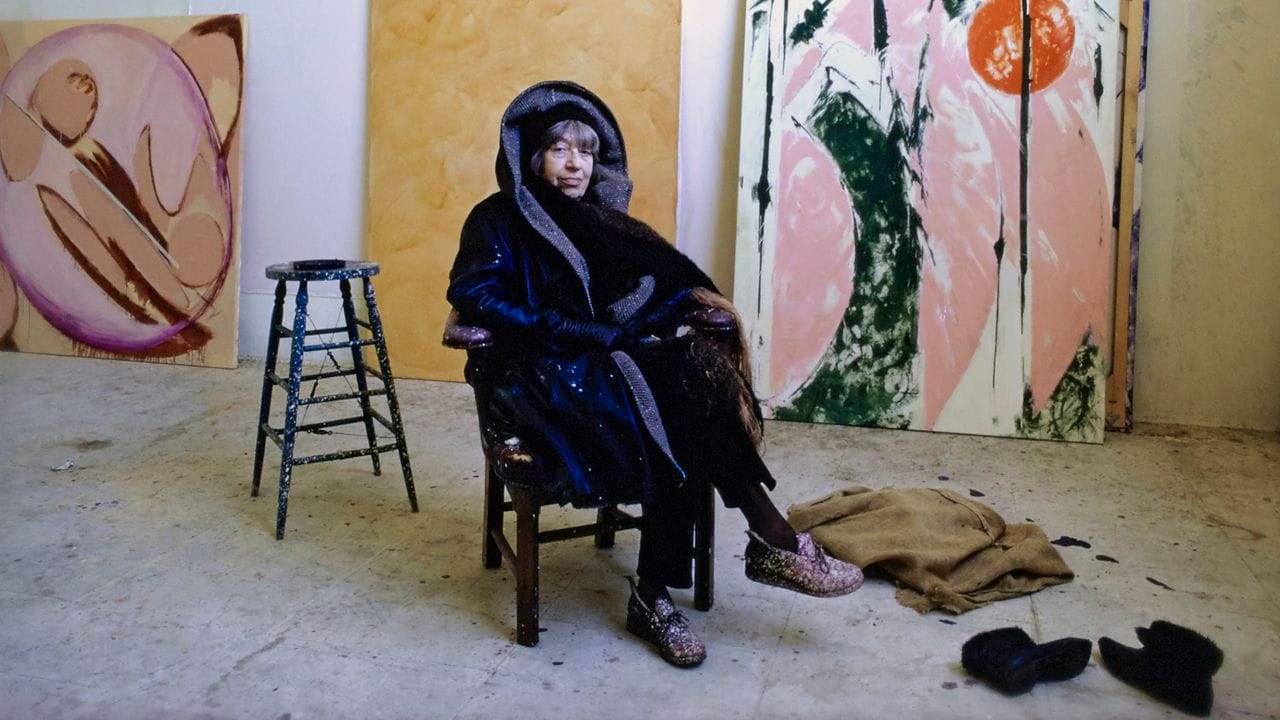
Reported by Vogue.
History has a habit of sidling up to genius and calling it by the wrong name. For decades, Lee Krasner — Abstract Expressionist, Cooper Union-trained, serious painter — was filed under "Jackson Pollock's wife" by an art world that couldn't quite manage two great names in the same household. According to Vogue, Krasner was not only painting alongside Pollock in mid-century New York, she was exhibiting in the same galleries and fighting the same aesthetic battles that repositioned New York as the global capital of art — a seismic cultural shift that made postwar American painting as consequential to the twentieth century as Paris had been to American writing in the twenties.
The erasure was so complete it had its own punchline. When Barnett Newman organized the "Irascible Eighteen" — the landmark protest against the Metropolitan Museum's neglect of American art — he called the Pollock household and, when Krasner picked up the phone, asked for Jackson. He didn't mention the petition at all. Krasner wasn't asked to sign. That omission tells you everything about the architecture of that world: brilliant women answering phones for brilliant men, then watching history get made without them.
The Artist Behind the Myth
What makes Krasner's story more than a grievance, though, is how she metabolized the obstruction. She survived the Depression, studied under Hans Hofmann (who complimented her work by saying it was "so good you would not know it was done by a woman" — his idea of high praise), and is widely credited with steering Pollock away from Thomas Hart Benton's provincial regionalism toward the modernist masters that would define his legacy. Krasner herself was characteristically precise about it: "I know that Pollock affected me enormously; I dare say I must have had some effect on him." That is a woman choosing her words very carefully.
Pollock, for his part, was an outlier among the Abstract Expressionists — the only major artist of that generation to marry another avant-garde painter of equal standing. He baked the apple pie, shared the household labor, and hung her canvases next to his on the wall. The macho mythology around him, Krasner made clear, was a press invention. She never stopped painting because her husband didn't approve; the question, she said, simply never arose. After his death, the weight shifted: "Mrs. Jackson Pollock" became, in her words, an art-world burden — one that didn't exist while he was alive.
By the early seventies, when critic Barbara Rose interviewed her for the magazine, Krasner was finally shaking loose of the widow designation and filling her studio with new work — canvases of radiant color, swirling floral forms, white space that breathed. She had handed off the Pollock estate materials and returned, deliberately, to being Lee Krasner the painter. Forty years of career, uninterrupted by indifference, grief, or litigation. That is not a footnote. That is a life's work.
The real revolution in Abstract Expressionism wasn't just the paint on the canvas — it was one woman refusing, quietly and absolutely, to disappear into someone else's legend.
Read the original at Vogue.