From the Archives: The Romantic Englishwoman, Helena Bonham Carter
Spreading her wings: this month, Helena Bonham Carter takes on Henry James.
Reported by Vogue.
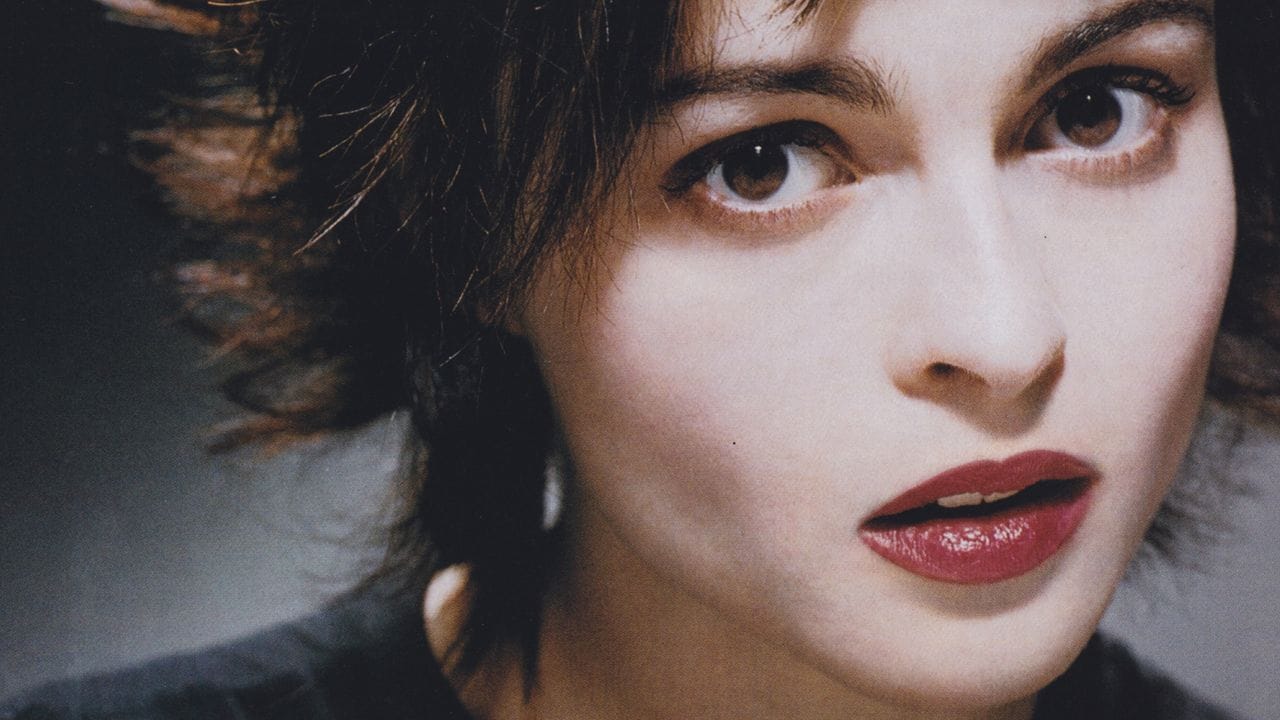
There's a version of Helena Bonham Carter that never quite existed — the delicate, corset-bound ingénue the industry kept casting and recasting until she practically became a period-drama prop. Twelve years of hair extensions, stays, and velvet frocks will do that to a person. "I, too, had almost forgotten what I looked like," she told Vogue in 1997, arriving at the Toronto International Film Festival in a slip skirt, a fitted cashmere top, and hair cropped boyishly short — barely recognizable from the character she plays in The Wings of the Dove.
The reinvention didn't happen overnight. It started with Woody Allen's Mighty Aphrodite, which handed Mira Sorvino an Oscar and handed Bonham Carter a sharp-tongued SoHo adulteress — her first real foothold in the present tense. What followed was a deliberate, almost gleeful dismantling of her own image: a stripper in Dancing Queen, a "snot-nosed whore" (her words, cheerfully delivered) in Margaret's Museum. She seemed to relish the messiness of it. The corseted roles had one practical upside, she admitted — they "pretty much guaranteed" she'd never have to undress on camera. That guarantee expired with Dove.
The Role That Changed Everything
Director Iain Softley's adaptation of the notoriously cerebral Henry James novel turned out to be something else entirely — psychologically sinister, visually arresting, centered on Bonham Carter as Kate, a woman operating with what Softley described as a combination of "Machiavellian connivance and gamine innocence." He was so committed to casting her that he was willing to fight the perception that she'd become a period-piece stereotype. The film's climactic nude scene — her first — required multiple takes and at least one moment of uncontrollable laughter. "What the fuck am I doing!" she reportedly thought mid-scene, fully naked and tasked with looking effortlessly seductive. Softley's memory is more charming: she paused to remind him, "One day I'm going to watch this movie with my granny."
At 31, Bonham Carter had already made 20 films, played Marina Oswald on American television, and quietly become one of Britain's most bankable exports — even if Hollywood's big-budget machine had mostly kept its distance. Her aristocratic lineage (great-granddaughter of Prime Minister Lord Asquith, granddaughter of Liberal grande dame Lady Violet Bonham Carter) had been weaponized by publicists who knew American audiences would lap it up. She found the whole mythology faintly ridiculous, pointing out that her great-grandfather was solidly middle-class and that "lord" was essentially a political party favor. Still, she played the game when she had to, and knew exactly when she was doing it.
What comes through in every anecdote — the laughter on set, the cigarettes stubbed out before self-deprecating admissions, the flat she'd bought but still hadn't moved into — is someone fundamentally uninterested in performing the version of herself that's most convenient for everyone else. "I like the lifestyle and the money," she said plainly, which is the kind of thing women in Hollywood rarely said out loud in 1997.
The most radical thing Helena Bonham Carter ever did wasn't the nudity or the rule-breaking roles — it was insisting, quietly and consistently, on being more interesting than the costume she was handed.
Read the original at Vogue.