“I Don’t Think There’s Ever One Magic Bullet to a Story”—<i><em>I Shot Andy Warhol’</em></i>s<i><em> </em></i>Mary Harron On Its Complicated Female Protagonist
A 4K restoration of the filmmaker
Reported by Harper's Bazaar.
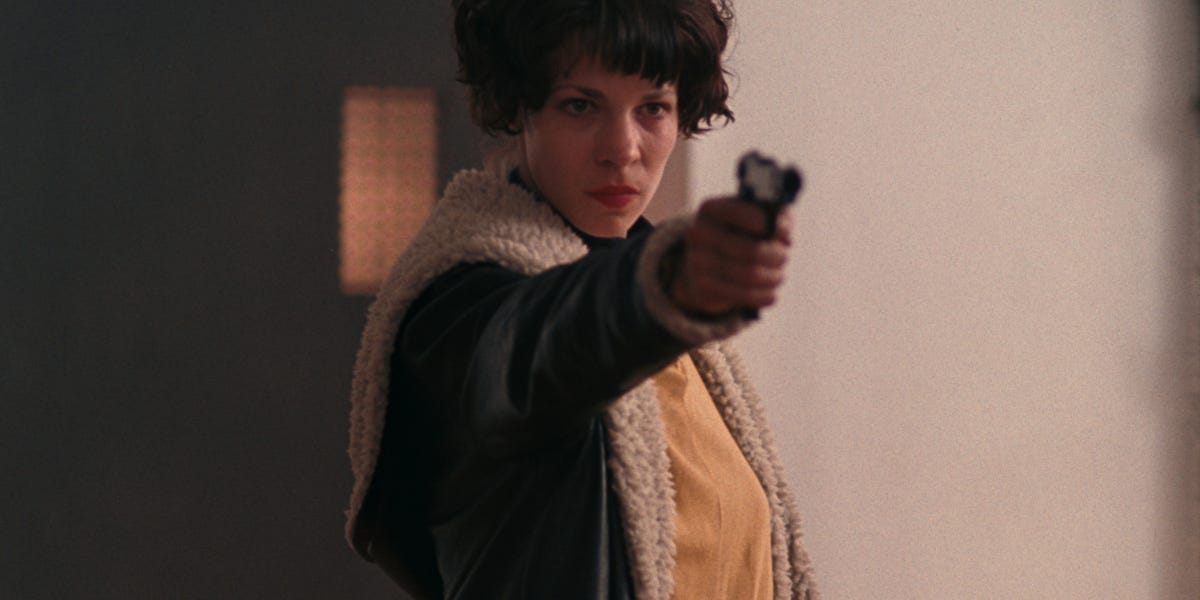
On June 3, 1968, Valerie Solanas walked into Andy Warhol's Factory and shot him. She was a playwright, a feminist, and a figure who had spent years orbiting Warhol's world — appearing in his 1967 film I, A Man — before paranoia consumed her. The catalyst, reportedly, was a failed pitch: Warhol rejected her play, Up Your Ass, and Solanas became convinced he planned to steal her work. Three years in prison followed. Then the SCUM Manifesto. Then obscurity. Then death in 1988. History reduced her to a footnote in someone else's biography.
Director Mary Harron wasn't satisfied with that version of events. She first encountered Solanas while making a Warhol documentary for the BBC — everyone at the Factory described her simply as "the crazy person who shot him." But when Harron stumbled across a copy of the SCUM Manifesto in a left-wing London bookstore, something shifted. "Nobody ever said how funny she was, how brilliant she was," she later reflected. Years of research followed, originally aimed at an experimental documentary, before it evolved into her 1996 debut feature, I Shot Andy Warhol.
The Fight to Tell Messy Women's Stories
Getting it made was its own battle. According to Harper's Bazaar, financiers pushed back hard — why waste a rare women-led film on someone so difficult? Why not Georgia O'Keeffe? Harron's response was pointed: "Did somebody say that to Scorsese?" No one questioned whether Travis Bickle deserved a movie. The double standard was glaring, and Harron named it plainly — female directors deserve the same right to morally ambiguous, even repellent, protagonists that male directors have always claimed as default.
Harron cast Lili Taylor after seeing her in Nancy Savocca's Dogfight, working from almost nothing — a voicemail recording, a few frames of Warhol footage — to build a Solanas who was simultaneously militant, vulnerable, and darkly funny. The film's most striking formal choice is its black-and-white sequences, lit to echo Warhol's own screen tests, where a composed Solanas reads directly from the manifesto into the camera. "It's like Valerie's in heaven," Harron says — not the chaotic real-world woman, but the controlled, ironic writer she wanted the world to take seriously. As for the manifesto itself, Harron draws a parallel to Antonin Artaud: beneath its radical surface is a ruthless, satirical analysis of gendered power — every dismissive thing men say about women, she argues, is actually a projection of their own behavior. The same energy, she notes, lives in the men of American Psycho, which she also directed.
I Shot Andy Warhol opened to polarized audiences and spent years in near-unavailable limbo — a fate that feels cruelly appropriate for a film about a woman history kept losing. Harron's refusal to deliver a verdict on Solanas is precisely the point: "I don't think there's ever one magic bullet to a story," she says. Complicated women don't owe us clean endings, and the films made about them shouldn't either.
Read the original at Harper's Bazaar.