<i><em>By Hook or by Crook,</em></i> a Queer Film Classic, Returns to Theaters
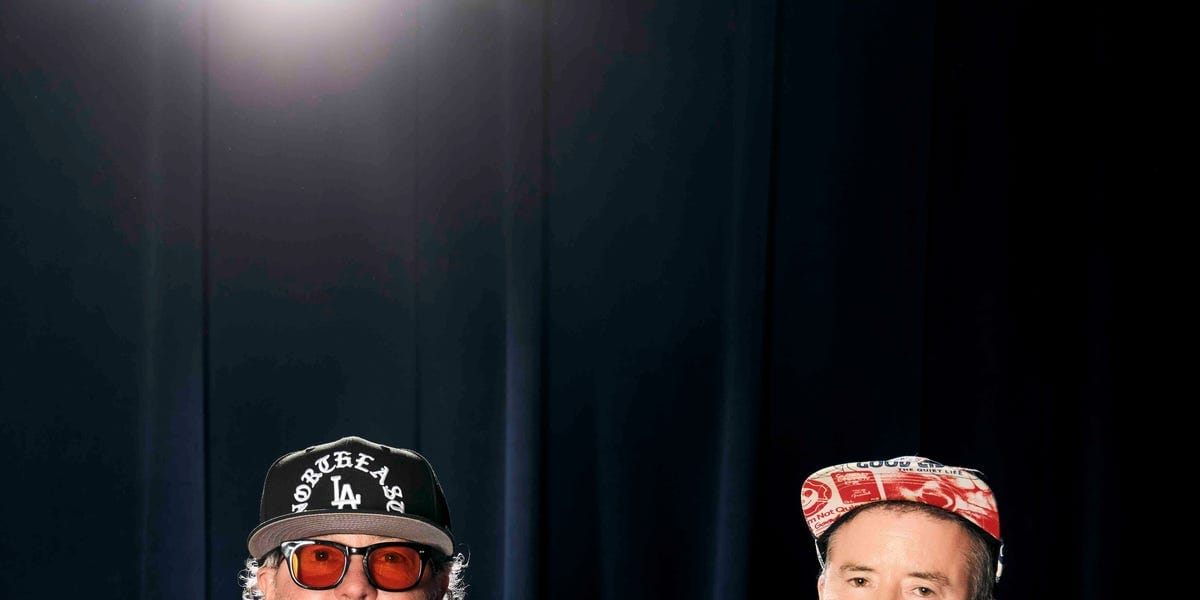
Directors Silas Howard and Harry Dodge talk about making art with friends, San Francisco in the 2000s, and the trap of representation
Reported by Harper's Bazaar.
Some films don't age — they ferment. By Hook or by Crook, the 2001 queer cult film codirected by Silas Howard and Harry Dodge, is one of them. Shot on early prosumer digital cameras in late-'90s San Francisco, it follows two drifters — Shy, a grieving trans man played by Howard, and Valentine, Dodge's shambolic, romantically earnest butch-lesbian character — through a hazy scheme of small-time robberies and found kinship. It swept the festival circuit, won an audience award at SXSW, and quietly became foundational queer cinema. Now, after a restoration by the Academy of Motion Picture Arts and Sciences, it's back in theaters this summer. According to Harper's Bazaar, when you see it on a proper screen, those deep cherry reds and blown-out neons hit differently.
What Gets Made When Nobody's Watching
The film was produced on pure community velocity — 30 days straight, 15- to 19-hour shoots, 50 locations, 150 extras, a dog, kids, and a crew of roughly 12 people working for what amounted to $200 total. The Hole in the Wall, a legendary fag biker bar with a Harley hanging from the ceiling, became one of its sets. Artists, writers, and performers filled the background. Choreographer Sini Anderson and artist Stanya Kahn coached Howard and Dodge's performances when both were in the frame. Producer Steak House has been with the project for 25 years and counting. "Thematically, the movie is about radical tenderness," Dodge told Harper's Bazaar, "but this also describes the means by which it was produced." Howard would later direct episodes of Transparent, This Is Us, and Boots; Dodge's work now lives in the Museum of Contemporary Art and the Hammer Museum in Los Angeles. None of that was inevitable. All of it was collaborative.
What Howard and Dodge made was, at its core, an act of refusal — to wait for permission, to chase mainstream legibility, to treat creative ownership as a zero-sum game. The film contains lifted lines from Cool Hand Luke and Hud. Friends' dialogue made it in, credited loosely or not at all. Howard is unapologetic: "We're all stealing." Dodge frames it as generosity versus scarcity — too much anxiety about authorship and "everything is blocked," everyone staring at their own feet, unable to move. The San Francisco they filmed in — ACT UP crashing Pride, queer punk bars, the Bearded Lady café they co-founded — was already being hollowed out by the first tech boom, which, ironically, is partly what funded the shoot.
That city is largely gone now, and the film holds something of its ghost: the particular energy of people who built culture because no one else was going to do it for them. Digital restoration can't manufacture that. What it can do is make those neon colors bleed properly off the screen again, and let a new generation sit in the dark with a movie that still knows something true about loneliness, connection, and the specific warmth of people who chose each other.
The most radical thing By Hook or by Crook ever did wasn't the queerness or the lo-fi aesthetic — it was insisting that making something together, imperfectly, with your community, is the point.
Read the original at Harper's Bazaar.