This Pilates Mat Workout Mimics The Effects Of A Reformer Flow And Helps Undo The Effects Of Sitting
"My back stiffness has largely disappeared."
Reported by Women's Health Magazine.
Somewhere between "no pain, no gain" and burnout, a lot of us lost the plot on what exercise is actually supposed to feel like. Pilates — specifically the kind that mimics reformer work without requiring a $4,000 machine — is quietly pulling people back. And according to Women's Health Magazine, the science behind the obsession is more solid than the celebrity endorsements might suggest.
The physical case is straightforward: research published in Postgraduate Medical Journal links Pilates to meaningful reductions in chronic low back pain, while a meta-analysis in Complementary Therapies in Medicine found it also decreases symptoms of depression and anxiety. For anyone desk-bound for eight-plus hours a day, that combination hits differently. "Fitness fads come and go, but Pilates has stood the test of time," says Carrie Campbell, instructor and owner of Positively Pilates LLC in Hoboken, New Jersey. And it isn't just a standalone practice — one study in the International Journal of Sports Medicine found that Pilates improved functional movement in recreational runners, potentially cutting injury risk for anyone using it as cross-training.
The Reformer, Decoded
The reformer — that spring-loaded, pulley-rigged apparatus that looks equal parts physical therapy equipment and medieval contraption — was invented by Joseph Pilates himself, a German gymnast and boxer who, while interned in England during World War I, literally rigged springs to bed frames so injured prisoners could train. The modern machine operates on the same logic: a sliding carriage working with and against adjustable spring tension to create both concentric and eccentric muscle engagement. Campbell notes that its design enforces proper alignment by default — shoulder blocks, a foot bar that neutralizes the pelvis — making it uniquely forgiving for beginners and corrective for everyone else. Harder than the mat? Yes and no: the springs resist you, but they also offset gravity, so the difficulty is more nuanced than a straight difficulty comparison suggests.
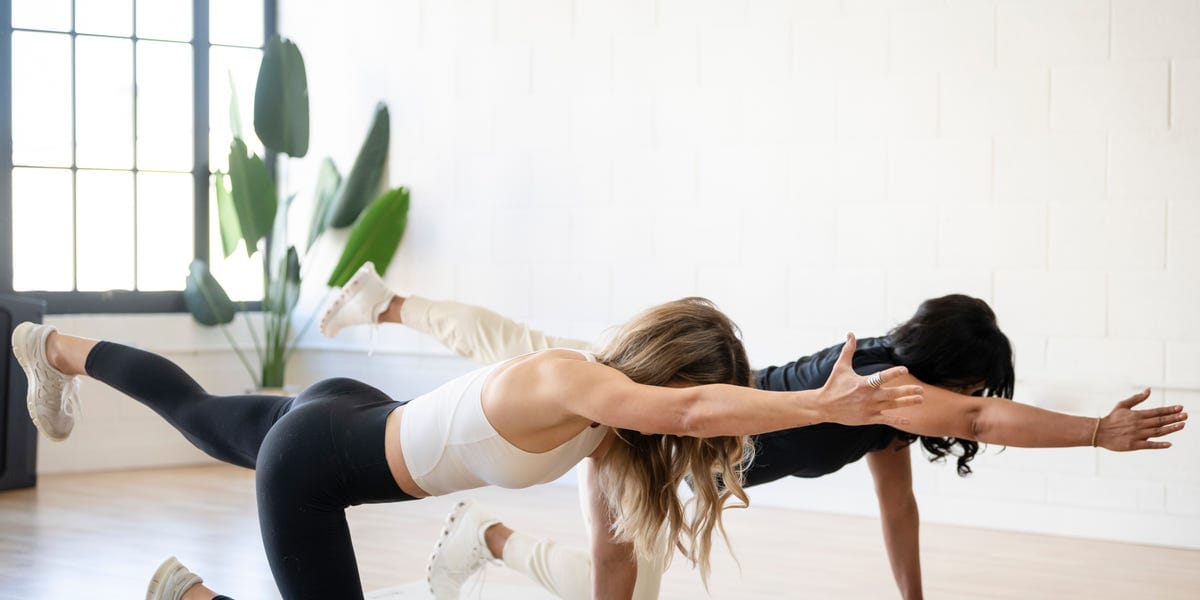
If studio access isn't in your budget or schedule, Blossom Leilani Crawford, owner and director of Bridge Pilates in Brooklyn, New York, built an extension-based mat flow designed specifically to undo what sitting does to your body — tight hips, stiff shoulders, compressed spine. The sequence moves through foot work, a prone hundred, pulling straps, rowing, corkscrew, a lunge stretch, and a standing balance, all targeting the postural muscles that desk life quietly destroys. Form-fitting clothes are non-negotiable (both for alignment feedback and to avoid catching fabric in any springs, should you eventually go reformer).
Whether you're a lapsed gym-goer, a runner with wrecked knees, or just someone who wants to move without dreading it, Pilates meets you exactly where you are — and the data suggests it'll actually make you feel better while doing it.
Read the original at Women's Health Magazine.