Walking Less Than 10k Steps Daily Can Help Maintain Weight Loss, Study Finds
It’s less than 10,000 steps, for starters.
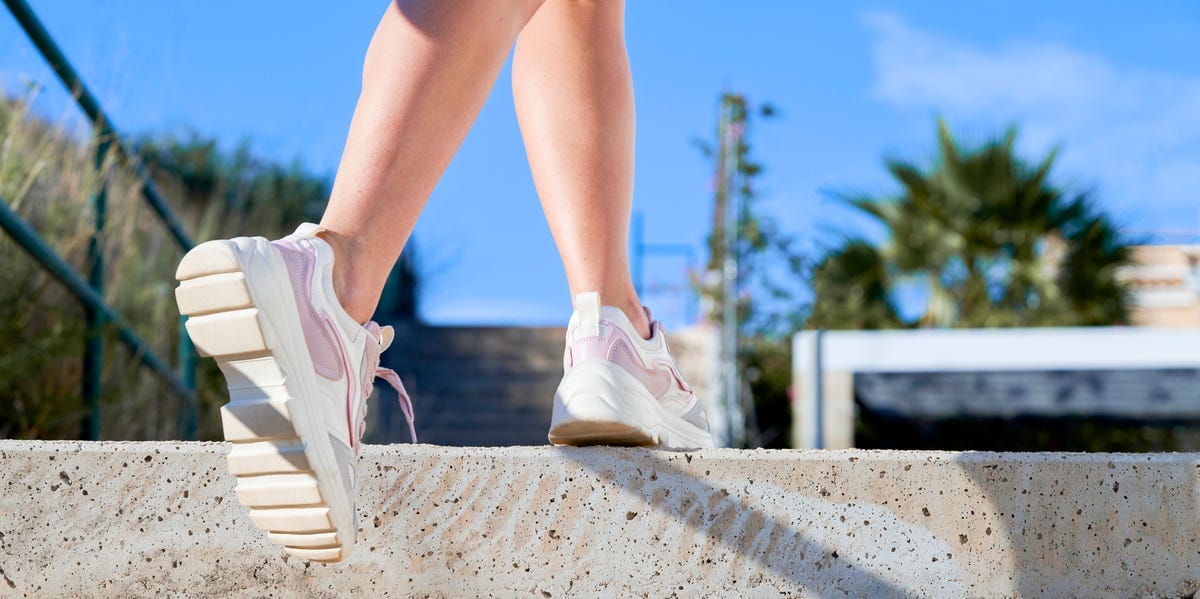
Reported by Women's Health Magazine.
The fitness world has spent decades worshipping at the altar of 10,000 steps — a number that, it turns out, may have always been more marketing than medicine. New research is making a compelling case that a more modest daily target is actually enough to do one of the hardest things in weight loss: keep the weight off for good, according to Women's Health Magazine.
A systematic review and meta-analysis published in the International Journal of Environmental Research and Public Health analyzed 14 randomized controlled trials involving nearly 4,000 adults, with an average age of 53 and an average BMI of 31. Participants who followed structured lifestyle modification programs — combining dietary changes with step-tracking — increased their daily step count from roughly 7,200 to an average of 8,454 steps during active weight loss. They shed about 4.4 percent of their body weight, or nine pounds. During the maintenance phase, those same participants held steady at around 8,241 steps per day and kept off an average of 3.28 percent of their body weight long-term. The conclusion: aiming for approximately 8,500 steps a day is meaningfully associated with sustained weight loss.
Why Walking Works — And Why It's Not Just About Burning Calories
The mechanism goes deeper than simple math. Study co-author Marwan El Ghoch, PhD, professor at the University of Modena and Reggio Emilia, points to metabolic adaptation — the body's survival response to caloric deficit, which slows metabolism to resist further weight loss. Maintaining an elevated step count appears to help counteract that biological pushback. El Ghoch also flags a behavioral trap that derails many people: treating the end of active weight loss as a finish line rather than a permanent shift. The patients who regain weight, he notes, are often the ones who quietly slide back into sedentary patterns once the "diet phase" feels over.
Movement alone, however, isn't the whole equation. Mir Ali, MD, medical director of MemorialCare Surgical Weight Loss Center at Orange Coast Medical Center, is direct about it: walking 8,500-plus steps means nothing if you're consistently overeating or relying on processed foods. "It's really about finding balance between movement and mindful eating," he says, recommending a foundation of protein, vegetables, and whole foods with movement layered on top. Dietitian Marie Hiett, RD, of Tufts Medicine Weight + Wellness, adds important nuance — 8,500 isn't a magic threshold so much as proof that consistent, incremental movement works, and that the long-standing 10,000-step gospel was never a prerequisite for results.
The practical translation is simpler than any fitness overhaul: take calls standing, park farther away, take the stairs, walk five minutes every hour if you're desk-bound. El Ghoch calls it "stacking" — threading movement into an existing routine rather than carving out dedicated gym time. The real shift isn't a step count. It's deciding that how you move every day is no longer a phase — it's just your life.
Read the original at Women's Health Magazine.