What’s the Minimum Amount of Protein You Need to Build Muscle?
Struggling to hit your protein goal? Here
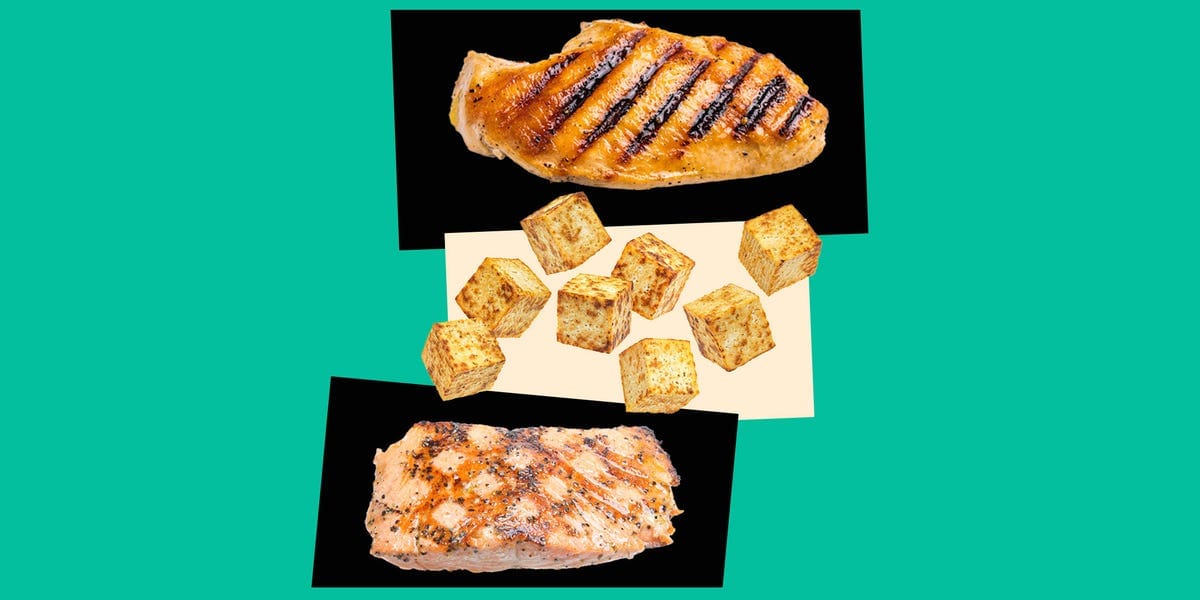
Reported by Women's Health Magazine.
Protein is everywhere right now — in your feed, your fridge, and approximately every wellness conversation you've had in the last two years. But underneath the noise is a genuinely useful question: how much do you actually need to build muscle, and is there a floor below which your efforts in the gym start going to waste?
According to Women's Health Magazine, registered sports dietitian Roxana Ehsani recommends most women aiming to build muscle target 1.4 to 2.0 grams of protein per kilogram of body weight per day — roughly 0.55 to 0.9 grams per pound. For a 150-pound woman, that translates to somewhere between 95 and 136 grams daily. Where you land in that range depends on how hard you're training: five days a week puts you at the higher end, two days a week at the lower. Hormonal shifts — particularly perimenopause and menopause — can also bump up your needs, which is worth discussing with a dietitian if you want a number tailored to your body specifically.
The Maintenance Floor Is Lower — But It's Still Real
If muscle building isn't your goal right now, preservation still requires intention. The official RDA of 0.8 grams per kilogram exists to prevent deficiency, not to support an active body — Ehsani is clear on that distinction. Research points to at least 1.2 grams per kilogram as the real minimum for women who exercise regularly and want to hold onto the muscle they have. Eat consistently below that, and your body will start cannibalizing muscle for fuel. As Ehsani puts it: trying to maintain muscle without enough protein is like keeping a fire burning without adding wood. You can tend the flame, but eventually it dims.
The good news? You don't need to white-knuckle a perfect number every single day. Fellow sports dietitian Leslie Bonci, MPH, RD, is refreshingly direct about this: a few off days won't unravel your progress. What matters is the pattern over time, not the precision of any single meal. Both experts push back on the all-or-nothing anxiety that tends to follow protein discourse — Bonci's advice is to start by tracking what you're already eating, then increase gradually. Protein needs are not one-size-fits-all, and eating an extreme amount isn't the goal.
Practically speaking, front-loading helps: aim for 20 to 30 grams at breakfast (eggs, Greek yogurt, cottage cheese, smoked salmon all qualify), treat protein as the anchor of each meal rather than an afterthought at dinner, and lean on convenient whole-food options — tuna, edamame, cottage cheese — when time is short. Supplements can fill gaps, but Ehsani and Bonci both recommend building your foundation from real food first.
Protein matters, but the goal is consistency across your week — not a perfect daily gram count.
Read the original at Women's Health Magazine.