Yes, GLP-1s Are Changing What Food People Buy — Here's How
A new JAMA study of nearly 2 million purchases found GLP-1 users shifted toward lower-calorie, lower-sugar, and less ultra-processed foods. Here's what changed.
Reported by MindBodyGreen.
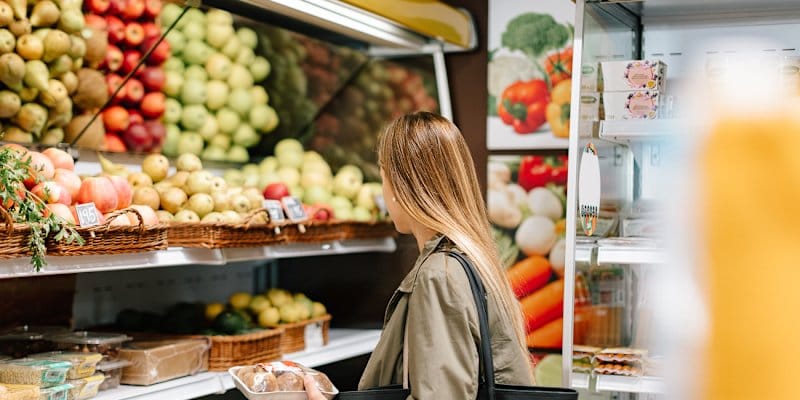
By now, you've heard about GLP-1 medications — Ozempic, Wegovy, and their cousins — and what they do to appetite. But a new study is zooming in on something more specific: not just how much people eat on these drugs, but what they're actually putting in their grocery carts.
Researchers analyzed nearly two million food purchases from 1,177 adults in Denmark, tracking receipt data from 2019 to 2022 — the year before and after 293 participants started a GLP-1 medication, according to MindBodyGreen. The findings, published in JAMA Network Open, showed a measurable shift: after starting a GLP-1, people's purchases trended lower in calories, sugar, carbohydrates, and saturated fat, and slightly higher in protein. There was also a move away from ultra-processed foods toward minimally processed alternatives. Meanwhile, the control group — people who hadn't started a GLP-1 — drifted in the opposite direction over the same period, buying slightly more sugar, carbs, and calories. That contrast matters. It makes the case that the medication, not just time or circumstance, is driving the change.
Modest Numbers, Real-World Meaning
Don't expect dramatic before-and-afters here. The differences were subtle — about 2.1 fewer calories and 0.6 fewer grams of sugar per 100 grams of food. That's not the same as swapping soda for sparkling water. Think less dramatic and more cumulative: reaching for whole-grain bread instead of white, choosing a yogurt over a cookie. Small repeated choices that, over time, add up. The pattern also tracks with earlier clinical data — a 2017 randomized controlled trial found that weekly semaglutide led to a 24% reduction in daily energy intake, along with reduced cravings and less preference for high-fat foods. And 2025 research on oral semaglutide linked it to decreased cravings specifically for sweets, chocolate, and starchy foods, with carbohydrates showing the steepest drop.
What ties all of this together is the concept GLP-1 users keep describing on their own: food noise — that persistent mental hum of cravings and appetite that these medications seem to quiet. When the noise goes down, the impulse purchases, the post-dinner sugar pull, the mindless reaching — it all softens. The grocery cart, apparently, reflects that.
The catch? Suppressed appetite means every bite counts more, not less. If you're eating less overall, what you choose has to work harder nutritionally — prioritizing protein to protect muscle mass, fiber-rich foods for gut health and satiety, and enough micronutrients to cover what reduced volume might miss. GLP-1s can do a lot, but they're not a substitute for eating with intention.
The bottom line: GLP-1s appear to be quietly rewiring not just hunger, but the actual choices that follow — and that's worth paying attention to even if you're not on one.
Read the original at MindBodyGreen.