The Mysterious Martin Margiela is Selling His Archive
Wigs, graffiti
Reported by Harper's Bazaar.
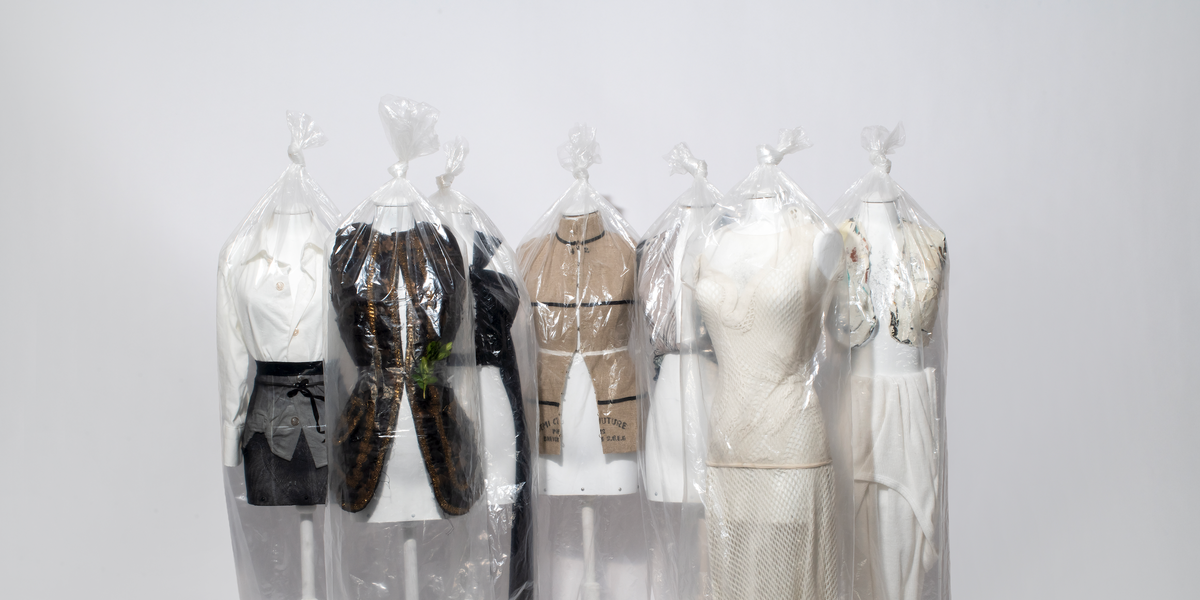
Martin Margiela has never done anything the conventional way — not the anonymous runway bows, not the all-white Parisian studio, not the Tabi boot that everyone initially hated and now can't stop buying. So it tracks that his first major archive sale would feel less like a Christie's auction and more like being handed someone's diary. According to Harper's Bazaar, the designer is offering a curated collection of personal objects and original pieces spanning four decades, and the lot of it reads like a masterclass in what fashion actually is when ego gets out of the way.
The items tell the story better than any retrospective could. There are white-veiled headpieces from 1988 — conceived specifically to strip models of their faces and force the eye onto the clothing, creating what Margiela called "almost an abstraction." There's graffiti-covered Tabi boots, the result of a 1991 group show at Paris's Galliera museum where visitors unexpectedly scrawled on the white-painted leather. He loved it. That spontaneity, that willingness to let the work be transformed by other people, is exactly the philosophy that made Margiela impossible to imitate and infuriating to categorize.
The Archive as Self-Portrait
Some of the most quietly devastating pieces aren't garments at all. A telephone — his private one — painted white like every surface in his studio because he refused to follow the dark, industrial aesthetic that Kawakubo and Yohji had made dominant. He wrote his own phone number directly on the receiver because he could never remember it. Then there's his first design dossier from 1987, a cotton-covered file he made to pitch Italian manufacturers on a then-unknown fashion house. It was stolen on a train; he recreated it immediately from memory. When police recovered the original, the two versions were nearly identical. The man's internal vision was that precise.
The archive also includes his Hermès knitwear from the years he helmed the house (1997–2003), built around what he defined as luxury: quality, comfort, timelessness, nothing more. His studio even developed private vocabulary for layering — le porté par deux for two identical pieces worn together, le triple set for three. And there are the Barbie dolls, recreated during COVID lockdown because the originals — three miniature versions of his Fall 1989 collection, made for an exhibition — were stolen and he, by his own admission, never got over it. He still had the patterns.
Fashion archives usually exist to celebrate legacy; this one feels like it's doing something rarer — letting you understand the logic of a mind that built rules specifically to dissolve them.
Read the original at Harper's Bazaar.